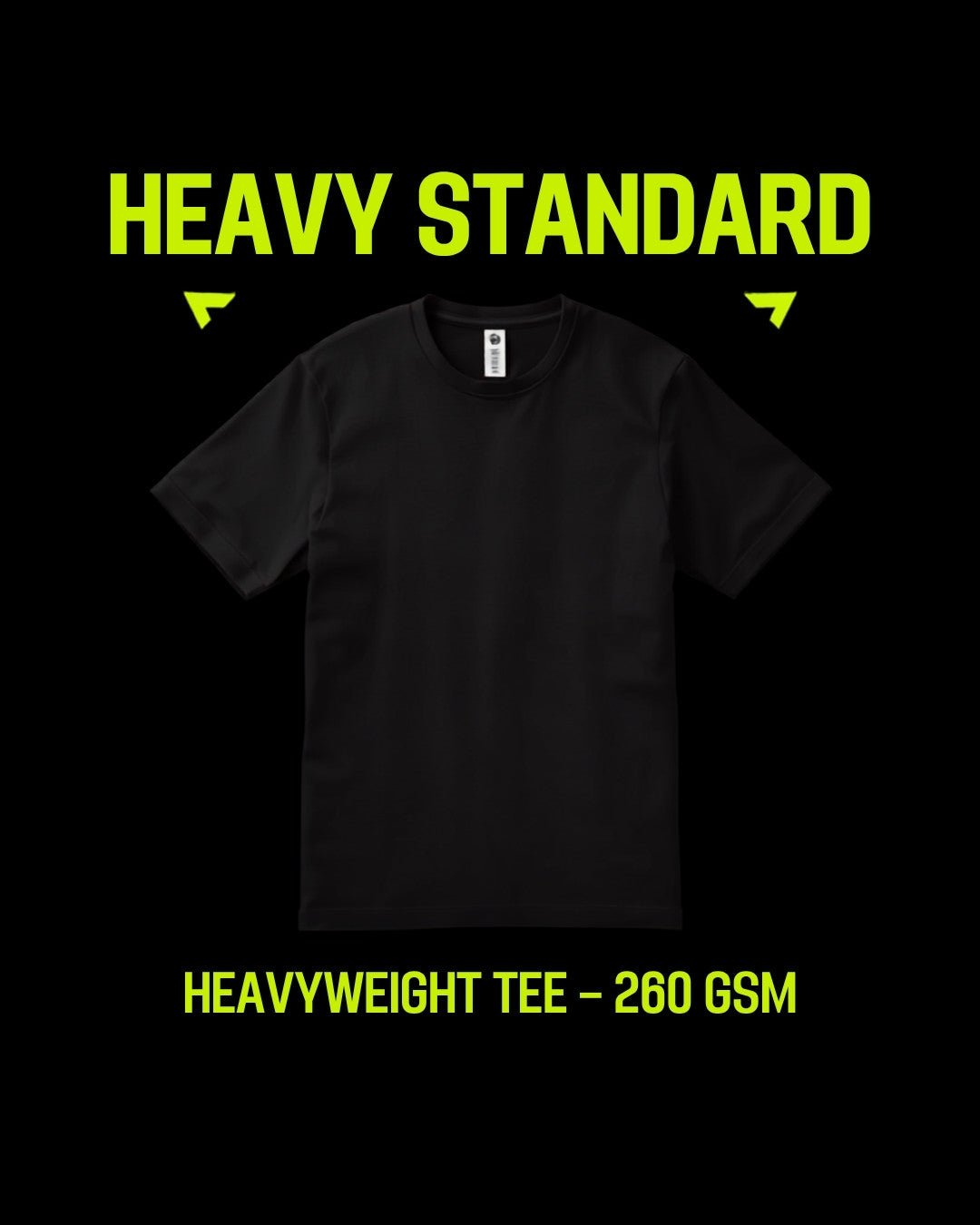
Two t-shirts can look identical on a screen and feel completely different in your hands. The reason usually comes down to one number: GSM. It's the single best predictor of how a tee will feel, how long it'll last, and whether it's worth the price — and almost no product page explains it. Here's what GSM means and how to use it.
What does GSM mean?
GSM stands for grams per square meter. It measures the weight — and by extension the density — of a fabric: literally, how many grams one square meter of the material weighs. The higher the number, the heavier, thicker, and denser the fabric.
It's not a marketing term. It's a straightforward, measurable spec, which is exactly why it's useful. When a brand tells you a tee is 260 GSM, they're giving you a real number you can compare — unlike vague words like "premium" or "soft."
The t-shirt weight scale
Most cotton t-shirts fall into three broad bands:
- Lightweight (120–150 GSM): Thin and airy. Common in fast-fashion basics and warm-weather tees. Breathable, but often semi-sheer, quick to lose shape, and prone to wear.
- Midweight (160–200 GSM): The everyday standard. A reasonable balance of comfort and durability — most high-street tees live here.
- Heavyweight (210 GSM and up): Thick, opaque, and structured. This is the premium, streetwear-leaning end: fabric with real body that holds a boxy shape and survives years of washing.
For reference, our heavyweight t-shirts sit at 260 GSM — firmly in heavyweight territory, chosen so the tee keeps its structure instead of clinging or going see-through.
Why heavier fabric is usually better
Higher GSM tends to mean a better garment, for a few concrete reasons:
- Durability: Denser fabric resists thinning, stretching, and holes. A heavyweight tee simply outlasts a thin one.
- Opacity: No showing through — a genuine problem with lightweight white and pastel tees.
- Structure and drape: Heavier cotton holds a shape. It's what gives a boxy or relaxed cut its clean, intentional silhouette rather than a limp one.
- It feels substantial: There's a reason a heavy tee reads as "expensive" the moment you pick it up. Weight signals quality because, here, it genuinely correlates with it.
When heavier isn't the answer
Higher GSM isn't universally "better" — it's about the right weight for the job. In peak heat, a lightweight tee breathes more and dries faster. Heavyweight cotton is warmer and takes longer to dry, which is the trade-off for its structure and longevity. The sweet spot for an everyday tee you want to keep for years is the heavyweight range; for a thin summer layer, lighter has its place.
The same logic scales across a wardrobe. Tanks run a little lighter, and sweatshirts run much heavier. Our cotton tank tops are 230 GSM — substantial for a tank — while our collared sweatshirts are 380 GSM, dense enough to wear like a light jacket.
How to use GSM when you shop
A quick checklist:
- Under 150 GSM: expect a thin, casual tee. Fine for hot weather; don't expect it to last.
- 160–200 GSM: a dependable everyday weight.
- 210–260+ GSM: a premium, structured tee built to last — worth paying more for.
- No GSM listed at all: a small red flag. Brands confident in their fabric usually tell you the number.
Once you start checking GSM, you can't unsee it — it turns "this feels nicer, I think?" into a decision you can actually make. And it's why we put the number on every product: 260 GSM tees, 230 GSM tanks, 380 GSM sweatshirts. Built heavy, kept simple.