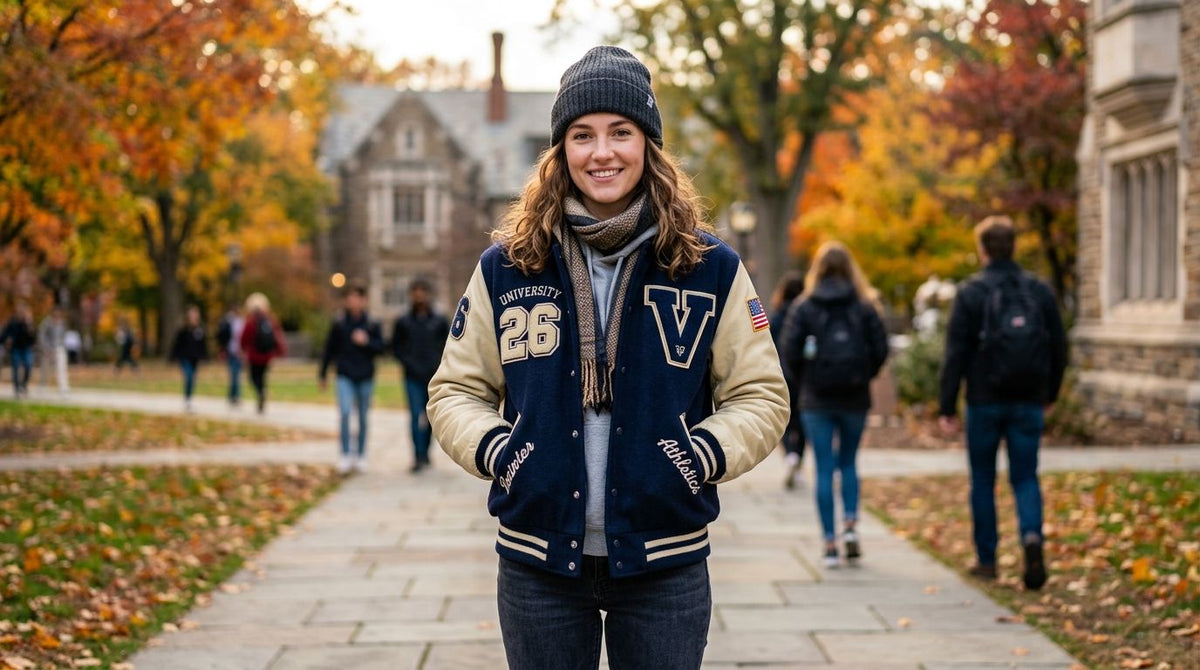
Warmest varsity jacket for 2026, ranked by construction: best overall warmth goes to Heavy Standard's Two-Tone Fleeced Varsity Jacket, best for the coldest climates is a wool-body, leather-sleeve letterman build, best for layering versatility is a quilted-lined varsity jacket, and best for mild weather is an unlined cotton-twill varsity jacket. Pick by climate and use case, not by logo.
- The warmest varsity jacket in 2026 is decided by fabric weight and lining, not brand name.
- Heavy Standard's Two-Tone Fleeced Varsity Jacket runs 11.2 oz/yd² (380 g/m²) in a 70% polyester, 30% cotton shell — thick enough for daily cold-weather wear.
- Wool-body, leather-sleeve varsity jackets trap the most heat but weigh the most and need dry cleaning.
- Quilted-lined varsity jackets pack more warmth per ounce, better for layering under a coat.
- Unlined varsity jackets are a style pick for 55°F and up, not a warmth pick.
Why this matters
Most "warmest varsity jacket" roundups rank by brand recognition. That tells you nothing about how the jacket performs at 30°F. Warmth comes from three variables: fabric weight (measured in GSM or oz/yd²), the lining, and the shell material. A varsity jacket at 380 g/m² with a fleece lining holds heat differently than the same silhouette at 220 g/m² with no lining at all.
Heavy Standard builds its varsity jackets to a heavyweight spec first and a silhouette second — the brand's whole catalog runs on the same logic as its 260gsm tees: state the fabric weight, skip the hype. That's the standard this ranking uses.
What makes the warmest varsity jacket
- Fabric weight — measured in GSM (grams per square meter) or oz/yd². Above 350 g/m² is heavyweight territory for outerwear shells.
- Lining type — fleece, quilted, or unlined. Lining traps a layer of still air, which is what actually holds heat.
- Shell material — wool, cotton-poly blends, and cotton twill all insulate differently; wool traps the most heat per ounce but breathes the least.
- Body-to-sleeve construction — classic letterman jackets use a different, heavier material on the body than the sleeves, which changes where the warmth sits.
- Cuff and hem finish — ribbed knit at the wrists and waist seals in warmth; open hems let it leak out.
- Closure — snap-front vs. zip changes how much cold air gets in at the chest seam.
Varsity jackets ranked by warmth: at a glance
| Jacket type | Best for | Standout feature | Key limitation |
|---|---|---|---|
| Heavy Standard Two-Tone Fleeced Varsity Jacket | Everyday cold-weather streetwear | 11.2 oz/yd² (380 g/m²), 70/30 poly-cotton fleece lining | Made to order, so lead time before it ships |
| Wool-body, leather-sleeve letterman | Coldest climates, structured wear | Heaviest wool body traps the most heat | Dry-clean only, heavier to wear all day |
| Quilted-lined varsity jacket | Layering under a coat | Insulation without wool bulk | Less warm than wool once wind picks up |
| Unlined cotton-twill varsity jacket | Mild weather, style-first outfits | Lightest, most breathable shell | Not built for anything under 55°F |
1. Heavy Standard Two-Tone Fleeced Varsity Jacket: best varsity jacket for everyday cold-weather warmth
The Two-Tone Fleeced Varsity Jacket is a 70% polyester, 30% cotton shell at 11.2 oz/yd² (380 g/m²), classified as a thick fabric weight. That puts it well above the 220-260 g/m² range most fashion varsity jackets ship at, which is why it holds heat instead of just looking like a jacket that should. It's made to order, in line with how Heavy Standard runs its whole catalog — heavyweight fabric specs first, styling second.
Pair it over a 260gsm cotton tee and the two heavyweight layers do more for warmth than a single thin midlayer under a lighter jacket.
Two-Tone Fleeced Varsity Jacket pros:
- 380 g/m² fleece-lined build holds heat through a full day outdoors
- 70/30 poly-cotton blend resists pilling better than all-cotton fleece
- Machine washable at 30°C on a gentle cycle — no dry cleaner required
Two-Tone Fleeced Varsity Jacket cons:
- Made to order, so it's not a same-week impulse buy
- Thick fleece lining means it runs warm indoors, not a jacket you keep on at a desk
Best for: daily cold-weather wear where you want one jacket that does the job without extra layers.
Verdict: Buy if 30-45°F is your normal outdoor temperature and you want the warmth without the wool-jacket weight.
2. Wool-body, leather-sleeve letterman: best varsity jacket for the coldest climates
This is the classic construction the varsity jacket is named after — a wool melton body with leather sleeves, usually with a snap-front closure and ribbed cuffs. Wool traps more heat per ounce than almost any other shell fabric, which is why this build still shows up as the go-to for sub-freezing wear.
Wool-body letterman pros:
- Wool body insulates better than cotton or poly-blend shells at the same weight
- Leather sleeves block wind almost completely
- Ribbed cuffs and hem seal in warmth at the openings
Wool-body letterman cons:
- Heaviest option on this list — noticeable weight on the shoulders after a few hours
- Wool body usually needs dry cleaning, leather sleeves need conditioning
- Breathes poorly, so it overheats fast indoors
Best for: stadiums, outdoor events, and climates that sit below freezing for weeks at a time.
Verdict: Buy if you live somewhere genuinely cold and don't mind dry-clean maintenance. Skip it if you want something you can machine wash.
3. Quilted-lined varsity jacket: best varsity jacket for layering versatility
Quilted lining uses stitched channels of synthetic fill instead of wool or fleece. It adds warmth without the bulk of a wool body, which makes this construction the easiest to layer under a heavier coat on the coldest days or wear alone on a 40-50°F afternoon.
Quilted-lined varsity jacket pros:
- Lighter than wool-body construction at a comparable warmth level
- Compresses well, so it layers under a coat without adding much bulk
- Usually machine washable, unlike wool-body builds
Quilted-lined varsity jacket cons:
- Loses to wool once wind cuts through the shell fabric
- Quilted stitching can flatten over time, reducing loft and warmth
Best for: shoppers who need one jacket that works both as a standalone layer and as a midlayer.
Verdict: Buy if you want flexibility across a temperature range rather than one narrow use case.
4. Unlined cotton-twill varsity jacket: best varsity jacket for mild weather
No lining means no trapped air layer, so this build is a style choice, not a warmth choice. Cotton twill shells sit light on the shoulders and breathe well, which is exactly why they underperform once temperatures drop.
Unlined cotton-twill varsity jacket pros:
- Lightest option, easiest to wear indoors without overheating
- Most breathable shell on this list
- Usually the most affordable construction to produce
Unlined cotton-twill varsity jacket cons:
- No insulation layer, so it does almost nothing below 50°F
- Least durable against wind
Best for: transitional weather and outfits built around the silhouette rather than the function.
Verdict: Wait on this one if warmth is the actual goal — it's built for looks, not cold.
How we ranked
Each entry was scored against the six criteria above: fabric weight, lining, shell material, body-to-sleeve construction, cuff/hem finish, and closure. Heavy Standard's own Two-Tone Fleeced Varsity Jacket is included because its 380 g/mʳ spec and fleece lining put it in direct comparison with the wool-body category, not because it's the house brand — its cons are listed the same as every other entry. For a wider view of construction options in this category, the varsity jackets for men guide breaks down more silhouettes beyond warmth alone.
Which varsity jacket should you choose?
If you want one jacket that handles daily cold without dry-clean maintenance, the Two-Tone Fleeced Varsity Jacket at 380 g/mʲ is the pick for 2026. If your winters run genuinely brutal, the wool-body, leather-sleeve build still wins on raw heat trapped per hour outdoors. Quilted-lined jackets split the difference for anyone who layers often, and unlined cotton-twill jackets are a mild-weather or style-only buy — don't expect it to perform below 50°F.
FAQ
What is the warmest varsity jacket in 2026?
A wool-body, leather-sleeve varsity jacket traps the most heat per hour outdoors, but a fleece-lined build at 380 g/m² like Heavy Standard's Two-Tone Fleeced Varsity Jacket gets close without the dry-clean upkeep.
Is a fleece-lined varsity jacket warmer than an unlined one?
Yes. The fleece lining traps a layer of still air against the body, while an unlined cotton-twill shell has no insulation layer and performs poorly below 50°F.
What GSM should a varsity jacket be for real warmth?
Look for at least 350 g/m² in the shell fabric. Heavy Standard's Two-Tone Fleeced Varsity Jacket runs 380 g/m² (11.2 oz/yd²), which is well into heavyweight territory.
Can you machine wash a varsity jacket?
It depends on construction. Wool-body letterman jackets usually need dry cleaning, but poly-cotton fleece builds like the Two-Tone Fleeced Varsity Jacket can go on a 30°C gentle machine wash cycle.
Are quilted-lined varsity jackets warmer than fleece-lined ones?
Quilted lining insulates well for its weight and layers easily, but a thick fleece lining at 380 g/m² generally holds more heat standalone than a lightweight quilted build.
What's the difference between wool-body and poly-cotton varsity jackets?
Wool traps more heat per ounce but breathes poorly and often needs dry cleaning. Poly-cotton blends like the 70/30 mix in Heavy Standard's fleeced jacket resist pilling and machine wash easily.
Should you size up a varsity jacket for warmth?
Only enough to fit a midlayer underneath. A jacket sized too large lets cold air pool inside instead of trapping body heat close to the shell.
One last thing
The number that actually predicts warmth on a spec sheet is grams per square meter, not the word "heavyweight" printed on a hang tag. A 380 g/m² fleece-lined shell like the Two-Tone Fleeced Varsity Jacket will out-warm plenty of jackets marketed as winter-ready but built at half that weight. Check the GSM before you check the price.