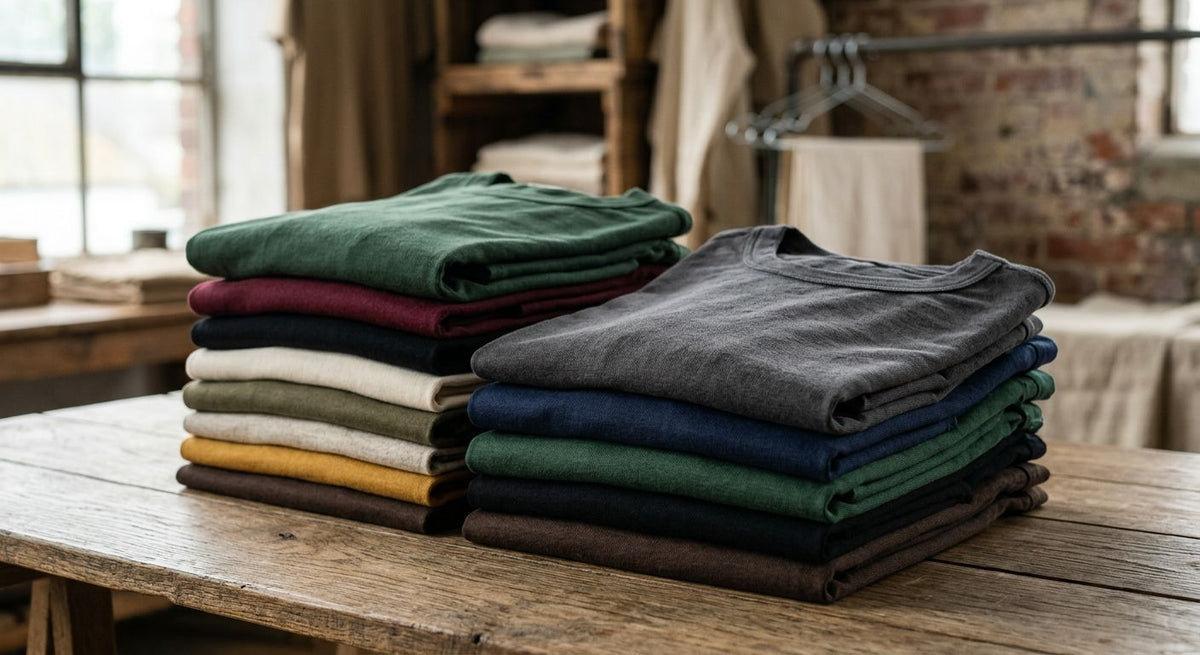
If you want the short answer: the best heavyweight cotton t-shirt for most people in 2026 is the Heavy Standard Heavyweight Boxy T-Shirt, built from 260gsm cotton with a boxy cut that holds shape wash after wash. Best for two-tone panel style: the Unisex Plaid Paneled T-Shirt. Best budget pick: the Uniqlo U Heavyweight Crew Neck. Everything else on this list slots into a specific use case below.
- Heavy Standard's Heavyweight Boxy T-Shirt (260gsm cotton) is the best overall pick for best heavy cotton t shirts in 2026.
- Anything under 200gsm is not a true heavyweight cotton tee, regardless of what the label claims.
- The Unisex Plaid Paneled T-Shirt wins on two-tone paneling; Uniqlo U wins on price accessibility.
- 100% cotton construction outlasts poly-blends for shape retention after repeated washing.
Why this matters
Most tees marketed as "heavyweight" in 2026 sit at 180-200gsm — a mid-weight fabric dressed up in heavyweight marketing language. A genuine heavyweight cotton t-shirt starts around 220gsm and holds its shape after 20+ washes instead of thinning out and drooping at the collar.
Heavy Standard builds its lineup, including the Heavy Standard collection, around 260gsm cotton specifically because that density resists pilling and stretch-out better than the 180-200gsm tees most fast-fashion retailers sell. That distinction is the entire point of this list.
What makes the best heavyweight cotton t-shirt
- Fabric weight of 220gsm or higher — the baseline for a tee that doesn't collapse into drape after a few washes
- 100% cotton or cotton-dominant blend — poly-heavy blends feel heavy off the shelf but lose structure fast
- Boxy or structured cut — heavyweight fabric needs a cut that lets it hang rather than cling
- Reinforced seams and collar — the stress points that fail first on cheaper heavyweight tees
- Simple, low-maintenance care instructions — cold wash, low tumble dry, no dry clean requirement
- Consistent sizing across the run — heavyweight cotton shrinks differently than lighter fabric if the pattern isn't accounted for
At a glance
| Item | Best for | Standout feature | Key limitation |
|---|---|---|---|
| Heavy Standard Heavyweight Boxy T-Shirt | Overall pick | 260gsm 100% cotton, boxy structured cut | No graphic or print options |
| Heavy Standard Unisex Plaid Paneled T-Shirt | Two-tone panel style | Dual-fabric paneling at 230g/m² | Panel fabric B is a poly-cotton-rayon blend, not pure cotton |
| Heavy Standard Boxy Oversized T-Shirt | Oversized drop-shoulder fit | Roomy boxy silhouette | No published fabric weight listed |
| Carhartt Workwear Pocket Tee | Garage and job-site wear | Reinforced pocket construction | Boxy fit runs narrower than streetwear cuts |
| Buck Mason Heavyweight Tee | Slim structured fit | Tailored silhouette on heavy fabric | Fitted cut isn't built for layering |
| American Giant Classic Tee | U.S.-milled cotton sourcing | Domestic mill-to-garment supply chain | Premium positioning limits color drops |
| Uniqlo U Heavyweight Crew Neck | Budget entry point | Wide size run, easy reorder | Fabric weight varies season to season |
| Champion Heritage Jersey Tee | Athletic heritage look | Recognizable ringspun jersey texture | Looser weave than true heavyweight cotton |
| J.Crew Broken-In Heavyweight Tee | Everyday classic fit | Pre-washed soft hand feel | Softness trades off some shape retention |
| Todd Snyder Heavyweight Tee | Premium wardrobe staple | Refined finishing details | Highest price point on this list |
1. Heavy Standard Heavyweight Boxy T-Shirt: best heavy cotton t shirt overall
Built from 260gsm cotton with a boxy cut designed to hold its shape through repeated washing instead of collapsing into a drape. No graphics, no branding on the front — the fabric weight does the work.
Heavy Standard Heavyweight Boxy T-Shirt pros:
- 260gsm density sits well above the 220gsm heavyweight threshold
- Boxy cut suits streetwear and everyday casual styling equally
- Plain front means it layers under jackets or works alone
Heavy Standard Heavyweight Boxy T-Shirt cons:
- No print or graphic variants for shoppers who want branding
- Boxy fit runs roomier than a classic crew, which won't suit every buyer
Verdict: Buy. This is the reference point for what a heavyweight cotton t-shirt should weigh and feel like in 2026.
2. Heavy Standard Unisex Plaid Paneled T-Shirt: best for two-tone panel style
This one pairs a 100% cotton primary panel with a secondary poly-cotton-rayon panel at roughly 230g/m², giving the tee visual contrast without sacrificing the heavyweight base fabric.
Unisex Plaid Paneled T-Shirt pros:
- Two-fabric paneling adds visual texture most plain heavyweight tees lack
- Moderate 230g/m² weight still clears the heavyweight threshold
- Unisex sizing widens the fit range
Unisex Plaid Paneled T-Shirt cons:
- Panel B isn't pure cotton, so wear characteristics differ between panels
- Two-fabric construction means the panels can age at different rates
Verdict: Buy if the paneled look fits your rotation; otherwise the plain boxy tee is the safer pick.
3. Heavy Standard Boxy Oversized T-Shirt: best for oversized drop-shoulder fit
A boxier, more oversized cut than the standard tee, aimed at shoppers who want a drop-shoulder silhouette rather than a fitted or semi-structured tee.
Boxy Oversized T-Shirt pros:
- Roomier cut suits layering over other pieces
- Simple machine-wash, low-tumble-dry care
Boxy Oversized T-Shirt cons:
- No published fabric weight, so buyers comparing gsm across the list can't verify it directly
- Oversized fit isn't ideal if you want a tee that reads structured rather than relaxed
Verdict: Hold for shoppers specifically chasing an oversized silhouette; go with the Heavyweight Boxy T-Shirt if fabric weight is the deciding factor.
4. Carhartt Workwear Pocket Tee: best for garage and job-site wear
Carhartt built its reputation on workwear-grade cotton built to survive job sites, and the pocket tee carries that positioning into casual wear.
Carhartt Workwear Pocket Tee pros:
- Reinforced construction suited to rough daily wear
- Wide recognition and easy reorder availability
Carhartt Workwear Pocket Tee cons:
- Fit runs narrower than boxy streetwear cuts
- Workwear styling doesn't suit every casual wardrobe
Verdict: Buy if durability under physical wear matters more than fashion cut.
5. Buck Mason Heavyweight Tee: best for a slim structured fit
Buck Mason positions its heavyweight tee as a tailored basic rather than a streetwear staple, keeping the silhouette closer to the body.
Buck Mason Heavyweight Tee pros:
- Structured fit reads more polished than boxy alternatives
- Consistent sizing across drops
Buck Mason Heavyweight Tee cons:
- Slim cut limits layering versatility
- Less room for movement than oversized or boxy styles
Verdict: Buy for anyone who wants heavyweight cotton without a boxy silhouette.
6. American Giant Classic Tee: best for U.S.-milled cotton sourcing
American Giant markets its supply chain around domestic milling and manufacturing, which appeals to shoppers who care where their cotton is sourced and sewn.
American Giant Classic Tee pros:
- Domestic mill-to-garment sourcing story
- Straightforward classic fit
American Giant Classic Tee cons:
- Smaller color and style range than mass retailers
- Premium positioning narrows the buyer pool
Verdict: Buy if domestic sourcing is a priority over fit variety.
7. Uniqlo U Heavyweight Crew Neck: best budget option
Uniqlo's heavyweight crew line gives budget-focused shoppers a wide size run and easy restocking without hunting for a niche brand.
Uniqlo U Heavyweight Crew Neck pros:
- Widely available with consistent restocks
- Broad size range across the line
Uniqlo U Heavyweight Crew Neck cons:
- Fabric weight isn't always consistent season to season
- Fit and hand feel vary more than boutique heavyweight brands
Verdict: Buy as the entry point if budget outranks fabric consistency.
8. Champion Heritage Jersey Tee: best for athletic heritage look
Champion's heritage jersey tee leans on recognizable ringspun texture rather than raw fabric weight, appealing to shoppers who want the athletic-heritage aesthetic.
Champion Heritage Jersey Tee pros:
- Distinct ringspun jersey texture
- Strong brand recognition
Champion Heritage Jersey Tee cons:
- Looser weave than true heavyweight cotton tees
- Not built for the boxy streetwear silhouette
Verdict: Hold unless the athletic-heritage look specifically is the goal.
9. J.Crew Broken-In Heavyweight Tee: best for everyday classic fit
J.Crew's broken-in line pre-washes the cotton for a softer hand feel right out of the package, trading some structure for comfort.
J.Crew Broken-In Heavyweight Tee pros:
- Soft hand feel from the first wear
- Classic, versatile fit
J.Crew Broken-In Heavyweight Tee cons:
- Pre-washing softens fabric structure compared to raw heavyweight cotton
- Less shape retention over time than stiffer heavyweight fabric
Verdict: Hold for shoppers who prioritize softness over structure.
10. Todd Snyder Heavyweight Tee: best premium option
Todd Snyder's heavyweight tee sits at the top of this list on finishing details and material presentation rather than a distinct fabric spec advantage.
Todd Snyder Heavyweight Tee pros:
- Refined finishing and construction details
- Positioned as a wardrobe staple, not a fashion trend piece
Todd Snyder Heavyweight Tee cons:
- Highest price point among the options on this list
- Premium positioning means fewer casual, everyday color options
Verdict: Buy if budget isn't the constraint and finishing quality is the priority.


How we ranked
Each item was weighed against the six criteria above: fabric weight, cotton composition, cut, seam construction, care simplicity, and sizing consistency. Items that hit 220gsm or higher with 100% cotton and a structured or boxy cut ranked ahead of tees that market themselves as heavyweight without disclosing fabric weight.
Which heavyweight cotton t-shirt should you choose?
If you want one answer for 2026: buy the Heavy Standard Heavyweight Boxy T-Shirt. It clears the 220gsm heavyweight threshold by a wide margin at 260gsm, uses 100% cotton, and holds its boxy shape wash after wash. If the panel styling matters more to you, the Unisex Plaid Paneled T-Shirt is the next call. If your budget is the hard constraint, Uniqlo U's heavyweight crew is the reasonable fallback — just expect more season-to-season variation in fabric weight.
“Anything under 220gsm is a mid-weight tee wearing heavyweight marketing language.”
FAQ
What gsm counts as a heavyweight cotton t-shirt?
220gsm or higher is the general threshold for a genuine heavyweight cotton t-shirt in 2026. Tees below 200gsm are mid-weight regardless of how they're marketed.
Is the Heavy Standard Heavyweight Boxy T-Shirt better than Carhartt's pocket tee?
For pure fabric weight and shape retention, the Heavy Standard tee wins at 260gsm cotton in a boxy cut. Carhartt's pocket tee wins if you need reinforced pocket construction for job-site wear.
Do heavyweight cotton tees shrink more than regular tees?
Heavyweight cotton can shrink noticeably on the first wash if the pattern doesn't account for it. Cold wash and low tumble dry settings minimize shrinkage across the tees on this list.
What's the best budget heavyweight cotton t-shirt in 2026?
Uniqlo U's heavyweight crew neck is the best budget pick for wide availability and sizing range, though fabric weight varies more season to season than boutique brands.
Are poly-cotton blends as durable as 100% cotton heavyweight tees?
100% cotton heavyweight tees generally hold shape and drape better over repeated washing than poly-cotton blends, which can lose structure faster despite feeling heavy new.
Why does the Unisex Plaid Paneled T-Shirt use two different fabrics?
The paneling combines a 100% cotton primary panel with a poly-cotton-rayon secondary panel at roughly 230g/m2 to create visual contrast while keeping the base fabric heavyweight.
Is a boxy cut necessary for a heavyweight cotton tee?
No, but boxy or structured cuts let heavier fabric hang correctly instead of clinging. Slim-fit heavyweight tees like Buck Mason's still work, just with a different silhouette.
One last thing
The gap between a 180gsm tee and a 260gsm tee isn't marketing spin — it's the difference between a shirt that thins out at the collar after ten washes and one that still holds its boxy shape. Check the fabric weight before the price tag; it's the single number that predicts how the tee looks a year from now.