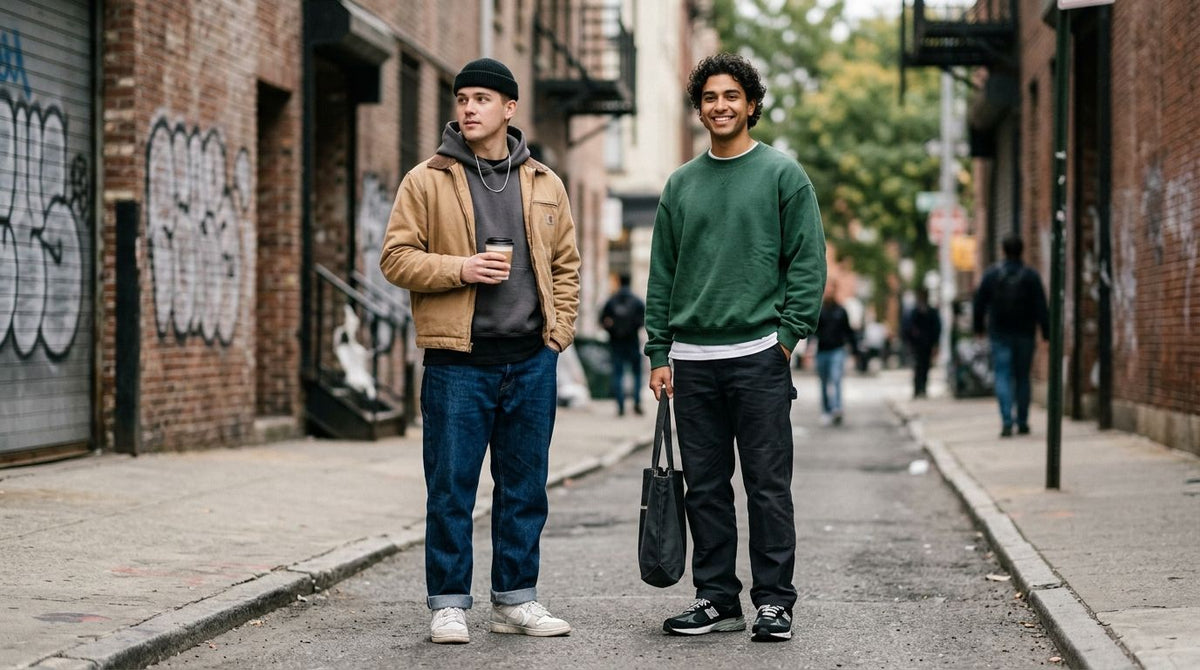
Best overall: the Heavyweight Boxy T-Shirt. 260gsm cotton, boxy cut, no branding, and it holds its shape through repeat washes better than anything lighter. Best for cold-weather layering: the Heavyweight Collared Sweatshirt at 380gsm, the heaviest piece in this guide, built with enough structure to wear like a light jacket instead of a second hoodie. Best outerwear statement piece: a varsity jacket. Six picks make up this affordable heavyweight streetwear rundown for 2026, and none of them require premium-outerwear money to get heavyweight fabric.
- The Heavyweight Boxy T-Shirt at 260gsm is the strongest all-around pick for affordable heavyweight streetwear in 2026.
- The Heavyweight Collared Sweatshirt at 380gsm is the heaviest, warmest option for cold-weather layering.
- Raw-edge tank tops and unlined shorts round out warm-weather and training days without adding bulk.
- A varsity jacket is the one piece worth spending the bulk of a budget tier on if outerwear is the priority.
- Oversized hoodies built for big and tall frames hold heavier GSM fabric without pulling at the seams.
Why this matters
Most "budget streetwear" guides just point at whatever is cheapest and call it a win. That skips the actual question: does the fabric hold up, or does it thin out and lose shape after a dozen washes. The Heavyweight Boxy T-Shirt is the clearest example of the tradeoff done right — heavy enough to hold structure, plain enough to layer under anything, and made-to-order so sizing stays consistent.
In 2026, heavyweight streetwear sits at a strange intersection: fashion-forward enough to show up in blokecore and workwear-adjacent styling, but built from the same fabric logic that's been around for decades — GSM decides everything. Fabric weight under 200gsm drapes and clings. Fabric weight over 260gsm holds a boxy shape on its own. That's the line this guide ranks against.
What makes the best affordable heavyweight streetwear
- Fabric weight measured in GSM, not marketing copy — 260gsm and up is where heavyweight starts holding shape
- Cut and construction — boxy vs. slim, raw edge vs. finished hem, each changes how a piece layers
- Layering versatility across seasons, not just one temperature range
- Value per wear — how many washes and seasons a piece survives, not the sticker
- Lined vs. unlined details on shorts and jackets, since that decision changes what the piece is actually for
- Made-to-order fit consistency, since sizing that shifts between orders defeats the point of a boxy or oversized cut
Affordable heavyweight streetwear at a glance
| Item | Best for | Standout feature | Key limitation |
|---|---|---|---|
| Heavyweight Boxy T-Shirt | Everyday base layer | 260gsm cotton, holds shape wash after wash | Heavier fabric takes longer to line-dry |
| Heavyweight Collared Sweatshirt | Cold-weather layering | 380gsm, structured collar reads like outerwear | Too warm outside cool-to-cold weather |
| Raw-edge tank top | Hot-weather training | Heavyweight cotton feel without arm coverage | Raw edges shed threads over repeat washes |
| Performance shorts, no liner | Training without compression | Breathes more, faster dry time | No built-in support layer |
| Varsity jacket | Outerwear statement piece | Heaviest structured outer layer in the lineup | Eats more of a budget tier than a tee or tank |
| Oversized hoodie, big and tall | Maximum warmth, bigger builds | Cut for bigger frames without pulling at seams | Bulk under a second jacket |
1. Heavyweight Boxy T-Shirt: best affordable heavyweight streetwear for daily wear
The baseline pick. A 260gsm cotton tee cut boxy, with enough weight to hold its shape instead of collapsing into a drape after a few washes. No graphics, no branding — the fabric weight is the entire pitch.
Heavyweight Boxy T-Shirt pros:
- Heavy enough that it doesn't need an undershirt underneath
- Boxy cut drapes off the body instead of clinging
- Holds shape across seasons better than lighter cotton tees
- Made-to-order sizing keeps the fit consistent order to order
Heavyweight Boxy T-Shirt cons:
- Heavier GSM means longer drying time on a line
- Boxy cut isn't the pick if you want a slim, fitted silhouette
Pricing: check current pricing on the product page.
Best for: an everyday base layer worn alone or under a jacket. Verdict: Buy.
2. Heavyweight Collared Sweatshirt: best for cold-weather layering
The heaviest piece in this lineup. A 380gsm cotton sweatshirt with enough structure to wear like a light jacket rather than a second hoodie — dense, warm, and built to hold shape season after season.
Heavyweight Collared Sweatshirt pros:
- Heaviest fabric weight of any pick in this guide
- Structured collar reads more put-together than a hoodie
- Doubles as outerwear in mild cold instead of needing a jacket on top
- Holds shape across seasons instead of stretching out
Heavyweight Collared Sweatshirt cons:
- Too warm for anything outside cool-to-cold weather
- Bulkier cut isn't the easiest thing to pack for travel
Pricing: check current pricing on the product page.
Best for: cold-weather layering that looks more finished than a hoodie. Verdict: Buy.


3. Raw-edge tank top: best for hot-weather layering
A sleeveless heavyweight cotton piece with a raw, unfinished edge instead of a hemmed one. It keeps the heavyweight cotton feel without the arm coverage — the pick for warm months or gym days when a full tee is too much fabric.
Raw-edge tank top pros:
- Keeps heavyweight cotton weight without full sleeve coverage
- Raw edge avoids the bulky hem that bunches under a jacket or jersey
- Layers cleanly under a varsity jacket for a blokecore-style outfit
Raw-edge tank top cons:
- Raw edges can shed extra thread after repeat washes
- Not warm enough on its own once temperatures drop
Best for: summer layering and gym days. Verdict: Buy for the season, skip if you need one piece year-round.
4. Performance shorts without a liner: best for training without added compression
Unlined shorts drop the built-in liner that lined pairs use for support. That means more breathability, faster dry time, and the choice of what goes underneath is entirely yours.
Unlined shorts pros:
- Breathe more than a lined pair
- No built-in liner means you choose your own base layer
- Faster dry time after washing or sweating through a session
Unlined shorts cons:
- No built-in support for high-impact training
- Not the pick for swimming or quick changes
Best for: lifting and everyday wear where compression isn't wanted. Verdict: Buy for lifting and daily wear, skip for running without an added base layer.
5. Varsity jacket: best for one outerwear statement piece
The heaviest outer layer in this guide. A varsity jacket adds structure a hoodie can't match and works as the single statement piece in an otherwise stripped-down rotation.
Varsity jacket pros:
- Heaviest structured outer layer of any pick here
- Adds shape and presence a hoodie or sweatshirt doesn't
- Works as the one standout piece in a plain rotation
Varsity jacket cons:
- A single outerwear piece eats more of a budget tier than a tee or tank
- Less versatile across warm-weather months than the rest of this list
Best for: the one outerwear piece worth prioritizing in a budget tier. Verdict: Buy if outerwear is the priority, wait if you already own one heavyweight jacket.
6. Oversized hoodie for big and tall: best for maximum warmth in bigger builds
Cut for bigger frames, this hoodie carries heavier GSM fabric without pulling at the seams the way a standard cut might on a larger build.
Oversized hoodie pros:
- Cut specifically for bigger frames
- Oversized proportions hold heavier fabric without seam stress
- Warmest hooded option in this lineup
Oversized hoodie cons:
- Oversized cut isn't for anyone wanting a fitted silhouette
- Hood adds bulk under a second jacket
Best for: big and tall builds needing extra room without losing heavyweight fabric feel. Verdict: Buy for bigger frames, skip if you're between standard sizes.
How we ranked these picks
Every item on this list gets measured against the same six criteria: GSM fabric weight, cut and construction honesty, layering versatility, value per wear, lined-vs-unlined distinctions where relevant, and made-to-order fit consistency. The Heavyweight Boxy T-Shirt and Heavyweight Collared Sweatshirt lead the list because their fabric weight — 260gsm and 380gsm — is stated outright, not implied. The remaining four picks rank by how well the category logic (raw edge, no liner, structured outerwear, big and tall cut) holds up against those same criteria in 2026.
Which affordable heavyweight streetwear pick should you choose?
Start with the Heavyweight Boxy T-Shirt if you're building a rotation from zero — it's the most versatile single piece on this list. Add the Heavyweight Collared Sweatshirt once the weather turns, since 380gsm is heavy enough to skip a jacket most cold days. If outerwear is the actual goal in 2026, put the bulk of a budget tier toward a varsity jacket instead of spreading it across smaller pieces. Anyone building for a bigger frame should prioritize the oversized hoodie over the standard tee first.
FAQ
What counts as affordable heavyweight streetwear in 2026?
Affordable heavyweight streetwear means fabric at 260gsm or heavier priced within a budget tier rather than premium outerwear pricing. The Heavyweight Boxy T-Shirt at 260gsm is the clearest entry point into that category.
Is a heavier GSM always better for streetwear?
Not always — 260gsm and up holds shape well for tees and sweatshirts, but heavier fabric also takes longer to dry and adds bulk in warm weather. Match the GSM to the season and use case, not just the highest number.
What's the difference between the Heavyweight Boxy T-Shirt and the Heavyweight Collared Sweatshirt?
The Boxy T-Shirt is 260gsm cotton built for everyday base-layer wear, while the Collared Sweatshirt is 380gsm, the heaviest piece in the lineup, built for cold-weather layering with a structured collar.
Should shorts have a liner for training?
Lined shorts add built-in support; unlined shorts breathe more and dry faster but leave the base layer up to you. Unlined works best for lifting and everyday wear rather than high-impact running.
Is a varsity jacket worth it on a budget tier in 2026?
Yes, if outerwear is the priority. A varsity jacket is the heaviest structured piece on this list and adds more shape than a hoodie or sweatshirt, though it takes a bigger share of a budget tier than a tee or tank.
Do oversized hoodies fit standard builds too?
Oversized hoodies built for big and tall frames carry heavier fabric without stress at the seams, but the cut runs loose enough that anyone wanting a fitted silhouette should look at a standard cut instead.
How many washes should heavyweight cotton hold up for?
Fabric at 260gsm and above is built specifically to resist the thinning and shape loss that lighter cotton shows after repeated washing, which is the main reason it costs more per piece than lightweight basics.
One last thing
The 120-gram gap between the Boxy T-Shirt (260gsm) and the Collared Sweatshirt (380gsm) is the single biggest variable in this entire guide — that's the difference between a base layer and a piece that replaces a jacket outright. Most budget streetwear guides never mention GSM at all, which is exactly why so many "heavyweight" pieces don't hold their shape past a dozen washes.