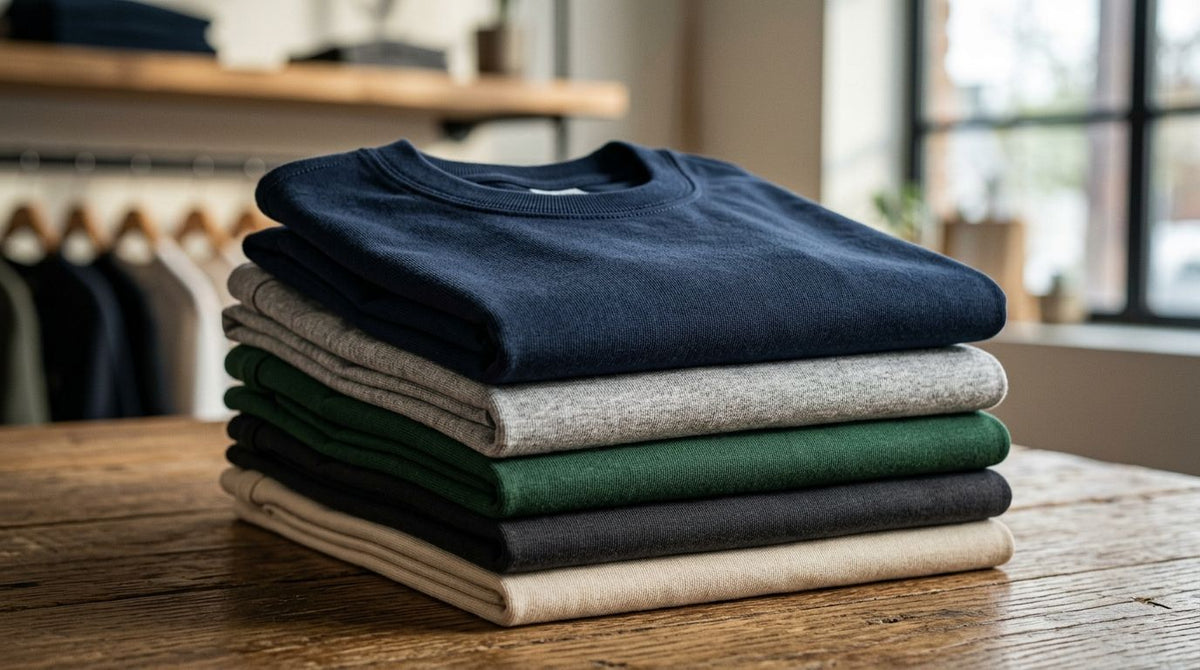
A 260gsm t-shirt is the point where cotton stops draping and starts holding its own shape — thick enough to skip an undershirt, dense enough to survive repeat washes without going see-through. The Heavyweight Boxy T-Shirt is the pick for 2026 if you want a true 260gsm cotton tee with no print, no branding, just weight and cut. Two other Heavy Standard tees sit in the comparison below at different densities, each solving a different problem.
- Heavyweight Boxy T-Shirt is the only confirmed 260 gsm t shirt in this comparison — 100% cotton, boxy cut, no print.
- Unisex Plaid Paneled T-Shirt runs 230 gsm with a poly-cotton-rayon panel for texture, one density tier below true heavyweight.
- Boxy Oversized T-Shirt trades a published GSM figure for an oversized drop-shoulder fit and strict low-heat care requirements.
- Mass-market tees typically sit at 150-180 gsm; 220+ gsm is where 'heavyweight' actually starts holding shape.
Why this matters
GSM (grams per square meter) is the only number that tells you how a tee will actually behave over time, not how it photographs on day one. A 150gsm tee looks fine folded on a shelf and then goes translucent after six washes. A 260 gsm t shirt does the opposite — stiff off the rack, then it breaks in without breaking down.
Most people shopping "heavyweight" tees in 2026 are comparing marketing copy, not fabric specs. This list ranks by the number that actually matters: grams per square meter, confirmed where the brand publishes it, flagged honestly where it doesn't.
What makes the best 260gsm t-shirt
- Confirmed GSM — a published weight, not a vague "heavyweight" label
- Fiber content — 100% cotton holds shape and breathes differently than a poly-cotton-rayon blend
- Construction — boxy vs tapered changes how the weight sits on the body
- Colorfastness through wash cycles — heavier cotton resists the thin-out that lighter tees show by wash 20
- Print-free vs branded — a clean 260gsm tee layers under jackets and jerseys without competing for attention
- Care requirements — some heavyweight cotton tolerates a normal wash; some needs gentler handling
At a glance
| Tee | Best for | Standout feature | Key limitation |
|---|---|---|---|
| Heavyweight Boxy T-Shirt | True 260gsm structure | 100% cotton, no print or branding | Boxy cut runs large for slim-fit shoppers |
| Unisex Plaid Paneled T-Shirt | Textured, vintage-street layering | Poly-cotton-rayon panel construction | 230gsm, one tier below true heavyweight |
| Boxy Oversized T-Shirt | Oversized drop-shoulder drape | Drop-shoulder, boxy oversized cut | GSM not published; care needs low-heat wash and dry |
1. Heavyweight Boxy T-Shirt: best 260gsm t-shirt for everyday structure
This is the heavyweight boxy tee that anchors the whole comparison — a 260gsm cotton tee cut boxy, built to hold its shape through the wash instead of collapsing into a drape. No graphics, no branding. It's the baseline against which the other two get measured.
Heavyweight Boxy T-Shirt pros:
- Confirmed 260gsm, 100% cotton
- Boxy cut holds structure instead of sagging after washes
- Clean front and back — layers under a varsity jacket or soccer jersey without print conflict
Heavyweight Boxy T-Shirt cons:
- No print or graphic option — strictly a blank heavyweight base
- Boxy fit adds visible bulk if you're used to slim or fitted tees
Best for: anyone who wants the actual density number, not a vague "heavyweight" claim. Verdict: Buy.
2. Unisex Plaid Paneled T-Shirt: best 230gsm tee for textured layering
The Unisex Plaid Paneled T-Shirt sits one density tier below true heavyweight at 230gsm, mixing 100% cotton with a poly-cotton-rayon panel. The panel construction gives it vintage-street texture that a solid 260gsm tee doesn't have — it's a different tool, not a lesser version of the same tee.
Unisex Plaid Paneled T-Shirt pros:
- Panel construction adds visual texture without a print
- Boxy, drop-shoulder, unisex sizing
- Distinct look for layering under jerseys or jackets
Unisex Plaid Paneled T-Shirt cons:
- 230gsm, not the full 260gsm density
- Poly-cotton-rayon panel means it's not a pure cotton tee
Best for: shoppers who want texture over raw density. Verdict: Buy if the plaid panel fits the fit, Skip if you specifically need 260gsm.
3. Boxy Oversized T-Shirt: best for oversized drape
The Boxy Oversized T-Shirt doesn't come with a published GSM figure, so it isn't ranked against the two confirmed heavyweight tees on density — it's here for the fit. Drop-shoulder, boxy, oversized. Care instructions call for a 30°C gentle wash, no bleach, low tumble dry, and low-temperature ironing away from the print.
Boxy Oversized T-Shirt pros:
- Drop-shoulder oversized cut for a looser silhouette
- Boxy shape pairs well with joggers or shorts for a casual formula
Boxy Oversized T-Shirt cons:
- No published GSM — can't be compared on density with confidence
- Stricter wash care than a straightforward cotton tee
Best for: shoppers prioritizing an oversized drape over a confirmed weight spec. Verdict: Hold until you can confirm the fabric weight matches what you need.


How we ranked
Ranking started with published GSM, since that's the one number that separates "heavyweight" marketing from an actual 260gsm t shirt. Fiber content came second — 100% cotton behaves differently through wash cycles than a poly-cotton-rayon blend. Construction (boxy vs oversized vs tapered) and stated care instructions rounded out the criteria. Where a product doesn't publish a GSM figure, it's flagged instead of guessed.
Which 260gsm t-shirt should you choose?
If you want the actual 260gsm density and nothing else on the tee, buy the Heavyweight Boxy T-Shirt. It's the only one of the three with a confirmed 260gsm spec and a 100% cotton build. If texture matters more than hitting the exact 260gsm mark, the Unisex Plaid Paneled T-Shirt's 230gsm panel construction is the better fit. Hold off on the Boxy Oversized T-Shirt until the fabric weight is something you can confirm against your own use case.
For a broader density comparison, the boxy heavyweight crew tees roundup covers more cuts at similar weight tiers.
FAQ
What does 260gsm mean on a t-shirt?
260gsm means the fabric weighs 260 grams per square meter — a heavyweight density that holds its shape through washes instead of thinning out. Most mass-market tees sit at 150-180gsm by comparison.
Is a 260 gsm t shirt too heavy for summer?
A 260gsm tee runs warmer than a 150-180gsm tee, but 100% cotton at this weight still breathes better than synthetic blends. It's built for structure and durability, not maximum airflow.
Is 260gsm better than 230gsm?
260gsm holds a boxier, more structured shape, while 230gsm with a panel blend adds texture at a slightly lighter weight. Neither is objectively better — 260gsm wins on pure density, 230gsm wins on visual detail.
Does a heavier GSM t-shirt shrink more in the wash?
Heavier cotton at 260gsm generally holds its shape better through washing than lighter tees, provided care instructions like low-heat drying are followed. Panel or blend construction, like a poly-cotton-rayon mix, can behave differently.
What GSM is considered heavyweight for streetwear?
220gsm and above is generally considered heavyweight in streetwear, with 260gsm sitting at the upper end of that range. Below 180gsm is typically classified as lightweight to midweight.
Can I wear a 260gsm tee under a jacket?
Yes — a clean, print-free 260gsm cotton tee layers well under varsity jackets or jerseys without adding print-on-print clutter. The boxy cut also gives enough room to layer without bunching.
Why don't all t-shirts list their GSM?
Not every brand publishes fabric weight, which makes direct comparison difficult. When a GSM figure isn't published, treat the tee's actual density as unconfirmed rather than assuming it matches a heavyweight claim.
One last thing
The gap between a 150gsm tee and a 260 gsm t shirt isn't marketing language — it's roughly 70% more fabric per square meter, which is the actual reason one shirt goes see-through by wash 15 and the other doesn't. If a listing calls itself "heavyweight" without a GSM number attached, that's the detail worth asking about before checkout.