

The 260GSM T-Shirt: Why Substance Matters More Than Logos
Most of what you call a premium t-shirt is just expensive tissue paper. You've been sold a logo draped over a flimsy, translucent mess. It's frustrating to watch a shirt lose its shape after a single wash. You're tired of collars that sag. You're done with fabric that has no spine. A heavyweight t-shirt 260gsm is the only logical answer. It's not about fashion. It's about industrial-grade substance. This is the weight where clothing stops being a consumable and starts being an investment.
You already know the feeling of a shirt that fails you. It drapes like a wet towel. It shows every contour it should be hiding. You want a tee that keeps its boxy silhouette through a hundred cycles. We'll show you why 260gsm is the definitive benchmark for streetwear that lasts years. You'll learn the technical math behind fabric density. We'll give you the tools to spot a shirt with real structural integrity. Stop buying disposable cotton. Start understanding the power of physical weight.
Key Takeaways
- Understand the math of density. Learn why 260gsm is the industrial benchmark for real substance.
- Compare structural mass to industry-standard rags. A heavyweight t-shirt 260gsm stands its ground while 180gsm flimsy cotton fails.
- Master the maintenance of heavy cotton. Protect the fabric's memory by avoiding high heat and low-effort care.
- Build a permanent silhouette. Discover how fabric weight dictates the boxy structure that cheap, lightweight alternatives can't replicate.
- Reject mass-produced waste. Invest in made-to-order precision designed for resilience and longevity.
What is a 260gsm T-Shirt? Decoding Fabric Density
Most consumers buy clothes based on a logo. They ignore the specifications. That is a mistake. If you want a garment that lasts, you look at the mass. You look at the density. You look at the GSM. This isn't a fashion metric. It is an engineering standard. A heavyweight t-shirt 260gsm is the definitive benchmark for anyone who values substance over hype. It is the point where a shirt stops being a disposable layer and becomes a structural asset.
A standard mall-brand tee usually sits around 150 to 160gsm. It is thin. It is translucent. It is designed to fail so you buy another one. A 260gsm shirt is approximately 40% heavier than those flimsy alternatives. This added mass is not just for show. It creates a barrier. It provides a level of opacity that cheaper fabrics can't match. You shouldn't see your skin through your clothing. If you do, the fabric has already failed its primary purpose.
The Math of Mass
The technical definition is simple. Grams per square metre (GSM) is the literal weight of a square meter of fabric. In a textile lab, technicians cut a precise circle of cloth and weigh it on a digital scale. This number represents the density of the knit. A higher GSM means more cotton fibers are packed into every square inch of the garment.
This density is the secret to a shirt that refuses to sag. When you increase the fiber count, you increase the internal friction of the knit. The fabric gains a "memory" for its own shape. While a 160gsm shirt will stretch and warp after a few hours of wear, a heavyweight t-shirt 260gsm stays rigid. It holds the line. It maintains the silhouette you intended when you put it on. This is the "Goldilocks" zone. It is heavy enough to provide structure but breathable enough for daily wear. It is the sweet spot of industrial durability.
Cotton Quality vs. Fabric Weight
Do not confuse thickness with density. They are not the same. You can create a "thick" shirt using low-grade, short-staple cotton. It will feel heavy, but it will also feel like sandpaper. It will pill. It will itch. It will lose its integrity after three washes because the short fibers can't hold the tension of a heavy knit.
- Density: How tightly the fibers are packed together.
- Thickness: The physical loft of the fabric.
- Integrity: The ability of the knit to resist stretching and pilling.
A true 260gsm garment requires high-grade long-staple cotton. These longer fibers allow for a tighter, smoother knit. This results in a fabric that is dense and heavy but remarkably soft to the touch. It is the difference between a sponge and a brick. One absorbs damage and falls apart; the other stands firm. We choose the brick. We choose the weight that commands respect.
Why 260gsm is the Standard for Boxy Streetwear
Mass creates structure. Structure creates the silhouette. This is the fundamental law of clothing construction. Most shirts on the market are designed for profit margins, not for the person wearing them. They use lightweight jersey that clings to the skin. They show every contour. They drape like a wet towel. A heavyweight t-shirt 260gsm rejects this. It uses physical mass to dictate the shape of the garment, regardless of the body underneath. It stands its ground.
When you wear a standard tee, the fabric is at the mercy of gravity. It hangs. It pulls. It loses its fight with the elements by midday. A 260gsm shirt is different. It possesses enough internal tension to maintain a crisp, boxy profile from the moment you put it on until you take it off. This isn't just about looking good. It is about a garment that refuses to surrender its form. It is the architectural foundation of a real wardrobe.
The Architecture of the Boxy Fit
The boxy fit is the cornerstone of modern streetwear, but it requires a specific geometry to work. Without density, a "boxy" shirt is just an oversized rag. Standard jersey fabric is too weak to support the design elements that define this style. 260gsm cotton provides the tensile strength necessary to hold a line. It transforms a simple piece of clothing into a structural statement.
- Dropped Shoulders: Heavy fabric projects the sleeve outward. It creates a sharp angle rather than a rounded sag.
- Crisp Collars: High-density knits prevent the "bacon neck" effect. The collar stays flat and tight against the neck.
- Torso Integrity: The shirt hangs in a straight vertical line. It ignores the contours of the body to create a clean, industrial silhouette.
All-Season Resilience
There is a common myth that heavy fabric is too hot for summer. This is a misunderstanding of how textiles work. Heat is trapped by synthetic fibers and poor airflow, not by density alone. High-quality, 100% natural cotton at a 260gsm weight is surprisingly breathable. It wicks moisture away from the skin. It provides a buffer against the sun. It feels substantial without being stifling.
There is also a psychological factor to consider. Wearing substance feels better. There is a sense of security in a shirt that has a measurable weight. It feels permanent. It feels grounded. If you are tired of wearing flimsy layers that feel like an afterthought, it is time to invest in heavyweight essentials that carry their own weight. You don't need a logo to prove your shirt has value. The fabric does that for you.
260Gsm vs. 180gsm: Stop Wearing Paper
Retailers call 180gsm "premium." We call it a liability. The industry has spent decades convincing you that thin, airy fabric is a luxury. It is not. It is a cost-saving measure disguised as comfort. A 180gsm shirt is the standard because it is cheap to produce, cheap to ship, and designed to be replaced. A heavyweight t-shirt 260gsm is the opposite. It is a rejection of the disposable. It offers 1.5 times the raw material of a standard tee, providing a foundation that 180gsm paper-thin alternatives can't match.
The first test is visual. Hold a standard retail shirt up to the light. You can see the world through it. That isn't a garment; it is a filter. If you can see your skin through the fabric, the shirt has already failed. A 260gsm knit is dense and impenetrable. It provides total opacity and a tactile hand-feel that commands respect. You don't just wear this weight. You feel its presence. The percussive, solid strike of heavy cotton against the skin creates a sense of armor that makes flimsy retail jersey feel like an oversight.
The Drapery Disaster
Lightweight shirts look like rags after three washes. It is a fact of physics. Standard 180gsm jersey lacks the internal structure to survive the agitation of a machine. The fibers break. The seams twist. The neck sags until it looks like bacon. This is structural failure. When a shirt loses its "memory," it stops being a piece of clothing and starts being a floor rug. It drapes over your shoulders without any intent or form.
A heavyweight t-shirt 260gsm maintains its integrity because the high-density knit resists torque. It stays square. The collar remains tight. While a light shirt surrenders to gravity, the 260gsm tee stands its ground. It keeps its boxy silhouette through a hundred wash cycles. You aren't just buying a shirt. You are buying a shape that lasts.
The Cost-Per-Wear Reality
Disposable fashion is a trap. You buy five cheap basics for the price of one real garment, and you think you've saved money. You haven't. Those five shirts will be in a landfill within eighteen months. One 260gsm tee will outlast them all. More fiber means more resistance to friction, heat, and time. It is an investment in longevity. Buying substance over volume is the only logical choice for a permanent wardrobe.
- Longevity: 260gsm offers up to 10 times the lifespan of a standard 180gsm tee.
- Sustainability: Buying one durable item reduces the waste generated by five disposable ones.
- Value: The cost-per-wear of a heavyweight shirt drops to pennies over years of consistent use.
Stop investing in paper. Start investing in mass. A shirt should carry weight. It should have a backbone. If it doesn't feel like a tool for living, it isn't worth the space in your closet. Choose the weight that stays. Choose the 260gsm standard.
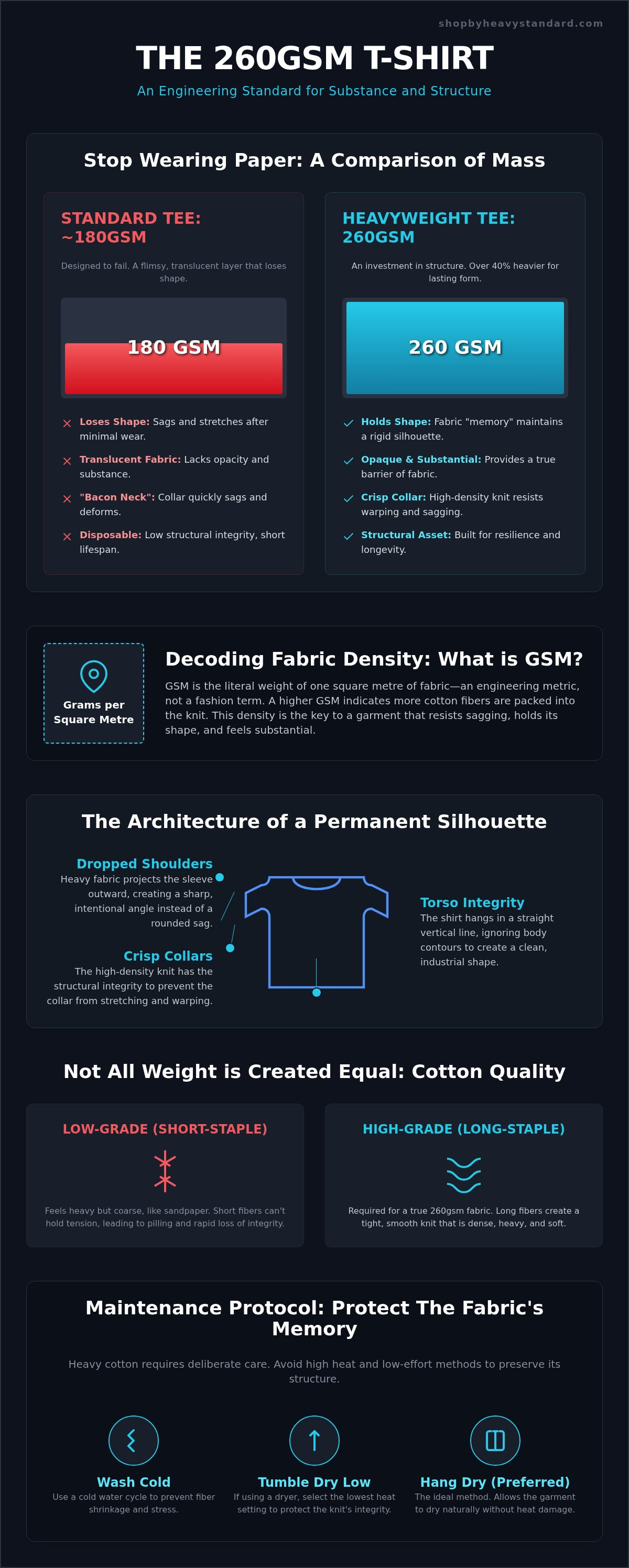
Care Guide: How to Handle 260gsm Heavyweight Cotton
You bought substance. Don't destroy it with laziness. Most people treat their clothes like garbage. They throw everything in a hot wash and hope for the best. That is how you kill a high-quality garment. A heavyweight t-shirt 260gsm is not just a shirt. It is a piece of equipment. It requires a specific protocol to maintain its structural integrity and industrial density.
High-density cotton has memory. If you treat it with respect, it keeps its shape for years. If you abuse it, you surrender the very structure you paid for. Heat is the primary enemy. It breaks down the natural fibers and forces the knit to contract. It turns an uncompromising, boxy tee into a warped, shrunken rag. You must be deliberate with your maintenance.
The Cold Wash Protocol
The washing machine is a battlefield. You need to protect the fabric before you start the cycle. Follow these three steps to ensure your gear remains immovable.
- Step 1: Turn the garment inside out. This protects the face of the fabric from machine friction. It prevents pilling and keeps the outer surface smooth and clean.
- Step 2: Use cold water. Heat shocks the cotton fibers. Cold water maintains the original knit density and prevents the aggressive shrinkage that ruins a perfect fit.
- Step 3: Skip the harsh detergents. Avoid bleach and heavy chemical softeners. They break down the natural cotton bonds and ruin the tactile, rugged hand-feel of the heavy knit.
Drying Without Destruction
The dryer is a cage of heat. It is where shirts go to die. For a heavyweight t-shirt 260gsm, the dryer is especially dangerous. It causes puckering along the heavy seams. The polyester thread used for stitching often shrinks at a different rate than the dense cotton fabric. The result is a rippled, uneven finish that destroys the clean, industrial lines of the garment. Avoid the machine at all costs.
Flat drying is the definitive standard. Lay the shirt on a clean, flat surface. While it is still damp, manually reshape the boxy fit. Pull the side seams straight. Flatten the collar. You are setting the fabric's memory for the next wear. If you must line dry, ensure the shirt is not dripping wet. The weight of the water in a heavy knit will pull the shoulders out of alignment. Gravity will win if you let it.
Storage matters just as much as washing. Never use hangers. The physical mass of a 260gsm tee will eventually create permanent hanger bumps in the shoulders. It ruins the dropped-shoulder silhouette. Fold your shirts. Stack them. If you want gear that stands up to the work, shop the heavyweight t-shirt 260gsm collection and treat it with the respect it deserves.
Heavy Standard: Made-to-Order Substance
We don't do lightweight. We don't do flimsy. Those are the tools of the fast-fashion machine. At Heavy Standard, we prioritize physical reality over marketing fluff. Our heavyweight t-shirt 260gsm isn't a seasonal trend. It is a permanent fixture. It is built for resilience. It is built for the long haul. We've stripped away the noise. No frills. No logos. Just pure, unadulterated mass.
The industry wants you to buy more. We want you to buy better. Most brands overproduce and hope for the best. They create mountains of waste and compromise on the knit. We took a different path. Everything we produce is centered on the raw physicality of the product. If it doesn't have the weight to stand on its own, it doesn't leave our floor. This is about establishing a definitive benchmark for what a t-shirt should be. This is clothing for those who value utility over aesthetics.
Rejecting the Generic
Mass production is a failure of intent. It creates waste. It compromises precision. We rejected that model from day one. Our shop runs on limited drops and made-to-order precision. This ensures every garment meets our specific industrial benchmark. It is a "take it or leave it" philosophy. We don't build for the masses. We build for the inner circle of those who understand that substance is non-negotiable. If you want a shirt that lasts years, you have to be fast. Our process is slow, but the results are permanent. Join the email list to secure your place in the next release. Once a drop is gone, it is gone.
We don't use flashy marketing. We don't use persuasive fluff. The product is the proof. When you hold a Heavy Standard piece, you feel the difference in density immediately. It is a stoic aesthetic for a rugged lifestyle. We focus on construction and durability because utility is the highest form of value. This is clothing for the strong and the silent. It is for those who know that a logo is just a distraction from a lack of quality.
The Last Tee You'll Buy
This is the last tee you'll ever need. That isn't a marketing claim. It is a material fact. When you invest in a heavyweight t-shirt 260gsm, you are opting out of the replacement cycle. You are choosing industrial-grade everyday wear. Substance is the only benchmark that matters in our workshop. We don't care about the fashion calendar. We care about structural integrity. We care about the physical weight of the cotton in your hands.
Stop settling for garments that dissolve in the wash. Stop paying for logos that hide poor construction. Demand more from your clothing. Demand mass. Demand resilience. If you are ready for a shirt with real backbone, the choice is simple. It is time to upgrade your standard. It is time to wear something that actually carries its own weight.
Build a Permanent Wardrobe
The choice is binary. You can continue buying disposable retail rags or you can invest in physical substance. Most shirts fail because they lack the raw mass to survive. They sag. They warp. They fade into irrelevance. A heavyweight t-shirt 260gsm changes the equation. It provides the architectural foundation for a silhouette that stays sharp. It relies on 260gsm high-density cotton to maintain its form through every wash and wear. This isn't a trend. It's a standard.
We don't manufacture for the masses. We build for those who demand industrial durability. Our made-to-order process ensures every piece meets a definitive benchmark of precision. You get a boxy silhouette built to last, not a flimsy layer designed for a landfill. The days of transparent, paper-thin cotton are over. Substance is the only metric that matters. Stop settling for less than what you deserve. Your clothing should be as immovable as your standards. Every stitch is a commitment to longevity. Every gram of fabric is a rejection of the temporary.
Stop wearing paper. Get the 260GSM Standard.
It's time to wear something with real backbone. Stand your ground.
Frequently Asked Questions
Is 260gsm considered heavyweight for a t-shirt?
Yes. Any fabric weight exceeding 200gsm is technically classified as heavyweight. A heavyweight t-shirt 260gsm sits in the definitive "Goldilocks" zone for premium streetwear. It provides approximately 40% more mass than the standard retail shirts found in most malls. This weight ensures the garment maintains a structural silhouette without becoming as cumbersome as a sweatshirt.
Will a 260gsm cotton t-shirt shrink in the wash?
Only if you ignore the protocol. High-density cotton possesses a strong memory, but extreme heat forces natural fibers to contract. You must use cold water and avoid the dryer. Heat is the enemy of fabric density. If you follow our care guide and dry the garment flat, the fit remains permanent. Neglect the instructions, and you surrender the structure.
Is 260gsm too thick to wear in the summer heat?
No. Breathability is a function of fiber quality, not just weight. 100% natural cotton allows for significant airflow and moisture wicking, even at higher densities. It acts as a physical buffer against the sun. While cheap synthetic blends trap heat, heavy natural cotton remains functional and resilient in high temperatures. It feels substantial but never stifling.
What is the difference between 200gsm and 260gsm fabric?
The difference is 30% more raw material. A 200gsm shirt is an entry-level heavyweight option. A heavyweight t-shirt 260gsm is an industrial standard. That extra mass provides total opacity and a more rigid drape. While 200gsm might still cling to the body, 260gsm stands its ground. It is the technical jump from "thick" to "structural."
How do I know if a t-shirt is actually 260gsm?
Trust the opacity test and the hand-feel. Hold the fabric up to a direct light source. If you can see through the knit, it isn't 260gsm. Feel the weight in your hands. It should strike the skin with a solid, percussive force. A real 260gsm shirt feels like an investment, not a consumable. Your hands know the truth before the scale does.
Why do heavyweight t-shirts have a boxy fit?
Physics dictates the fit. Heavy fabric possesses enough internal tension to resist gravity and body contours. It projects outward rather than draping downward. This creates the sharp, clean lines of a boxy silhouette. Lightweight fabric is passive and clings to the wearer. 260gsm cotton is active. It dictates the shape of the garment regardless of the body underneath.
Does higher GSM mean better quality cotton?
Not necessarily. GSM measures mass, not fiber length. You can produce a heavy shirt using low-grade, short-staple cotton, but it will pill and feel like sandpaper. Premium heavyweight gear requires long-staple fibers to achieve both density and a smooth hand-feel. Weight is the foundation of the shirt. Fiber quality is the finish. You need both for a garment to last.
Can I iron a heavyweight 260gsm t-shirt?
Yes, but it's rarely required. The physical weight of the fabric naturally pulls out wrinkles if the shirt is reshaped while damp and dried flat. If you must iron, use a medium heat setting and iron the garment inside out. The density of the knit handles heat better than flimsy alternatives, but direct contact can still stress the fibers. Reshaping is the superior method.
