

Oversized Basics for Men: The Heavyweight Boxy Fit
Most oversized clothing is a lie. It's often just a standard garment scaled up until the proportions fail. You've felt the result: T-shirts with collars that bacon-neck after two washes and hoodies that drape like thin, tired blankets. When you search for oversized basics for men, you aren't looking for more fabric. You're looking for better structure.
You want a silhouette that feels intentional, not accidental. A garment should act as armor, maintaining its shape through every wear. It's the difference between looking sloppy and looking grounded. We understand that frustration. This guide will show you how to differentiate between fleeting baggy trends and the heavyweight, boxy basics that define a modern wardrobe. We'll explore why fabric density is the foundation of style. You'll learn how to spot a true architectural cut and how to build a durable wardrobe that refuses to shrink or sag. It's time to master the heavyweight silhouette with precision.
Key Takeaways
- Distinguish between accidental baggy fits and intentional boxy silhouettes. True structure relies on a wide chest and dropped shoulders rather than sheer volume.
- Master the technical metrics of fabric weight. Use 260gsm for t-shirts and 380gsm for hoodies to ensure your garments maintain their shape and armor-like feel.
- Identify why fast fashion fails the durability test. Learn to avoid thin fabrics that lead to bacon neck and silhouettes that collapse after a single wash.
- Curate a resilient wardrobe of oversized basics men. Focus on high-density staples like the boxy soccer jersey and heavyweight tee for a consistent, premium aesthetic.
- Embrace the made-to-order philosophy. Choosing intentional production over mass-market retail ensures a higher standard of construction and longevity.
The Anatomy of Oversized: Baggy vs. Boxy Silhouettes
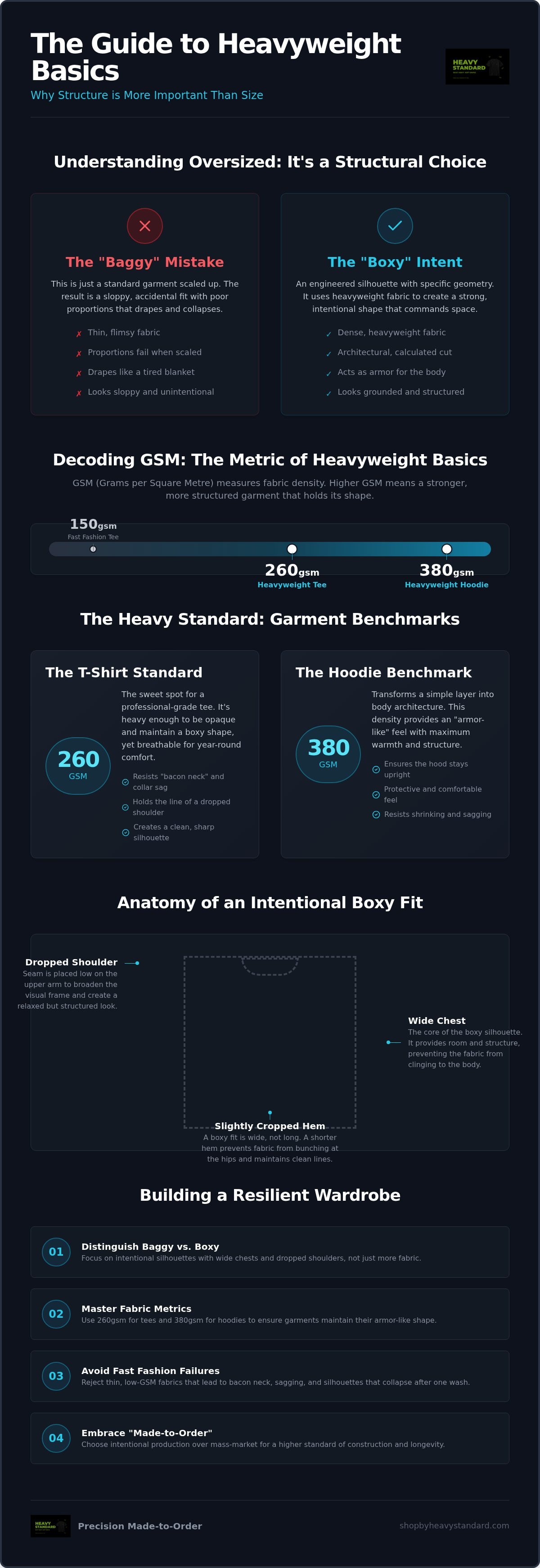
Oversized isn't a measurement. It's a structural choice. For years, the industry prioritized slim-fit silhouettes that clung to the body. Breaking that legacy requires more than just sizing up. You need to understand the difference between a baggy garment and a boxy one. A baggy shirt looks like an accident. A boxy shirt looks like a decision.
This intentionality has deep roots. Consider the Zoot Suit. Its exaggerated proportions were a bold statement of presence and subculture. Today, the goal for oversized basics men is similar. You want to command space without looking sloppy. This is achieved through specific design: a wide chest, dropped shoulders, and a slightly cropped length. Without these, you're just wearing a curtain.
Why Fabric Density Dictates the Fit
Structure requires physical weight. If the fabric is too thin, it succumbs to gravity. This is the "curtain effect." The material drapes over your frame and highlights every contour instead of creating its own shape. Integrity starts at the yarn level. A standard retail tee usually sits around 150gsm. It's flimsy. It sags. It loses its shape after an hour of wear.
Compare that to 260gsm heavyweight cotton. The density provides tactile resistance. It doesn't just hang; it stands. This fabric weight is the foundation for high-quality oversized basics men because it maintains the boxy silhouette through movement. It feels like armor. It creates a clean, sharp line from the shoulder to the hem that refuses to collapse.
The Intentional Drop Shoulder
The shoulder seam is the most critical point of engineering in a boxy fit. In a standard shirt, the seam sits on the bone. In an oversized fit, it drops. This drop must be calculated. If the sleeve is too long and the fabric too light, you get the "pajama look." It looks lazy. It lacks authority.
- The Seam: Placed low on the upper arm to broaden the visual frame.
- The Sleeve: Cut wide but structured to prevent bunching at the elbow.
- The Length: A boxy fit should be wide, not long. A cropped hem prevents fabric from bunching at the hips.
True oversized style is about geometry. It's about width and weight working in tandem. When the proportions are right, the garment holds its substance regardless of your body type. It's a rejection of the generic in favor of the intentional.
Decoding GSM: The Metric of Heavyweight Basics
GSM stands for Grams per Square Metre. It is the most objective metric for measuring fabric density. Most standard retail shirts fall between 140 and 160gsm. These garments are thin, often translucent, and lack the structural integrity required for a boxy fit. When sourcing oversized basics men, the GSM value tells you exactly how the piece will behave on your frame. High density is the only way to ensure a silhouette remains sharp rather than sagging.
This focus on substance has roots in the origins of streetwear, where durable, workwear-inspired fabrics were adopted for their longevity and presence. In modern construction, weight translates to architectural strength. A higher GSM means more cotton is packed into every square inch. This creates a garment that doesn't just sit on the body; it defines the body's outline. It resists the warping and thinning that plague lighter alternatives.
The 260GSM Standard for T-Shirts
For a T-shirt, 260gsm is the definitive sweet spot. It provides an opaque finish that ensures the fabric is never see-through, even in white or light grey. This weight is heavy enough to maintain a boxy shape through the chest and shoulders, yet breathable enough for year-round wear. It creates a tactile experience that feels substantial from the first touch. 260gsm represents the threshold for professional-grade streetwear.
Unlike lighter fabrics, this density resists the typical "sag" of a standard tee. It holds the line of a dropped shoulder with precision. It ensures the collar stays flat and the hem stays straight. If you're looking for a foundation that lasts, explore the durability of our heavyweight cotton collection to see the difference density makes.
The 380GSM Hoodie Benchmark
When it comes to fleece, 380gsm is the benchmark for quality. This weight transforms a hoodie from a simple layer into a piece of architecture for the body. At this density, the fabric is thick enough to provide maximum warmth without the need for flimsy, bulky layers underneath. It creates an "armor" feel that is both protective and comfortable.
- Hood Structure: High-gsm fleece ensures the hood stays upright and holds its shape rather than collapsing against the neck.
- Retention: The weight prevents the garment from stretching out at the elbows or waistband over time.
- Texture: The interior remains plush while the exterior maintains a rugged, durable face.
Choosing high-GSM basics is an investment in longevity. These garments are built to withstand the rigors of daily wear and repeated washing. They don't just look better; they stay better. By prioritizing density, you move away from disposable fashion and toward a wardrobe built on physical integrity.
Why Fast Fashion Fails the Oversized Test
Mass market retailers treat oversized basics men as a trend to be exploited rather than a garment to be engineered. They scale patterns up without increasing fabric quality. This is planned obsolescence in action. The garment looks acceptable on a hanger but fails the first time it hits water. The "Bacon Neck" phenomenon is the most visible symptom. Without a high-density rib or sufficient material weight, the collar loses its tension. It ripples. It sags. It communicates a lack of care.
This shift toward lower quality is a departure from the authentic Evolution of Streetwear. Early pioneers valued garments that could withstand the street. Mass production has traded that durability for speed. A made-to-order model rejects this. It prioritizes intentionality over volume. It reduces the environmental cost of flimsy, disposable fashion by producing only what is needed. Substance matters more than scale.
The Shape Retention Gap
Standard tees often shrink unevenly. This is called torque. The side seams twist toward the front because the knit is loose and unstable. High-density knits prevent this. When you invest in 260gsm or 380gsm pieces, the cost-per-wear drops significantly. You aren't replacing a warped shirt every three months. You're wearing a piece that maintains its architectural lines for years. It's an investment in physical integrity.
No-Frills Authority vs. Trend Chasing
Loud logos often mask poor construction. It's a distraction technique. Minimalist heavyweight gear relies on substance alone. There's a quiet confidence in a blank, structured hoodie. It doesn't need to shout to be noticed. The authority comes from the drape and the physical presence of the fabric. This is the stoic appeal of essentials that prioritize form and function over fleeting graphics. It's about looking intentional, not accidental.
Building a Heavyweight Capsule: Essential Silhouettes
Building a capsule requires a focus on synergy. You aren't just buying individual clothes; you're assembling a system of oversized basics men that work together to maintain a consistent silhouette. The foundation is the heavyweight T-shirt. It provides the structural base for every layer. From there, you expand into specialized silhouettes that bridge the gap between utility and aesthetics. The collared sweatshirt offers a more mature profile, using high-density fleece to ensure the collar remains crisp and upright. Performance shorts are equally vital. They provide the necessary visual weight at the bottom to balance a boxy top, preventing a top-heavy imbalance that ruins the intended shape.
Every piece in a heavyweight capsule should feel like a tool. These aren't temporary items. They're resilient staples designed to withstand daily use. By selecting a few high-standard pieces, you eliminate the noise of a cluttered wardrobe. You prioritize substance. You focus on garments that hold their ground. To start building your own resilient wardrobe, shop our latest heavyweight drops.
Styling the Boxy Soccer Jersey
The boxy soccer jersey is the ultimate summer alternative to a standard tee. It bridges the gap between pitch and pavement with ease. Because of its structural integrity, it functions more like a "jersey shirt" than a flimsy kit. Pair these structured knits with rugged denim for a balanced, industrial look. Alternatively, match them with performance shorts for a cohesive, athletic silhouette. The key is to let the fabric density do the work. The weight ensures the jersey hangs straight, providing a clean line that works in almost any casual setting.
Maintaining Your Heavy Cotton Gear
High-density fabrics require specific care to preserve their integrity. Heat is the primary enemy of cotton fibers. It causes premature thinning and can warp the architectural lines of a boxy fit. Always use a cold wash cycle. This protects the 260gsm and 380gsm density from breaking down. Hang drying is mandatory. It prevents the erratic shrinking caused by mechanical dryers and keeps the fabric face smooth. High-gsm materials are naturally resistant to pilling, but keeping them away from abrasive surfaces during the wash helps maintain that premium, tactile feel. Exercising patience in your garment care mirrors the deliberate patience required for made-to-order production.
The Heavy Standard: Precision Made-to-Order
Heavy Standard rejects the traditional warehouse model. Mass production relies on overstock. It relies on garments sitting in a distribution center for months. This leads to waste and a decline in construction quality. We choose intentionality. Our made-to-order approach ensures that every garment produced already has a home. It is a rejection of the disposable mindset that dominates the industry. By focusing on substance over speed, we maintain a level of physical integrity that warehouse brands cannot match.
This process requires patience. It is a partnership between the maker and the wearer. When you invest in oversized basics men through our system, you are choosing a garment that was built specifically for you. There is no filler. There is no excess. There is only the weight of the fabric and the precision of the cut. This is how we ensure that our 260gsm tees and 380gsm hoodies arrive with their structural properties intact. We don't sacrifice density for delivery times. We prioritize the "armor" feel that defines our brand philosophy.
The Made-to-Order Advantage
Intentional manufacturing is the only way to effectively reduce textile waste. By producing only what is ordered, we eliminate the environmental cost of unsold inventory. This model allows for a higher standard of craftsmanship in every piece. Each garment undergoes a rigorous check to ensure the boxy silhouette meets our architectural requirements. The dropped shoulders must be clean. The collars must be resilient. Because we are not rushing to fill a shelf, we can focus on the technical details that matter. This is the difference between a shirt that lasts a season and one that lasts a decade.
The "drop" culture is an extension of this focus. We release our gear in limited quantities. This ensures that our production lines are never overwhelmed. It keeps the quality high and the construction consistent. To secure the standard, you must be part of the cycle. It is a methodical way to build a wardrobe. You can Explore our latest heavyweight drops to see this philosophy in action.
Joining the Heavy Standard
Our email list is the foundation of our community. It is not a channel for frantic marketing or hyperbole. It is a direct line for those who value longevity over temporary trends. Members receive notification of new releases before they are made public. This allows us to manage our made-to-order volume while rewarding those who understand our process. We don't feel the need to over-explain. The weight of the 260gsm cotton and the structure of the 380gsm fleece speak for themselves. Substance matters more than noise. Joining the list is a commitment to a higher standard of basics. It is an invitation to a more purposeful way of dressing.
Elevate Your Standard
Mastering the boxy silhouette requires a shift from trend-chasing to technical appreciation. The best oversized basics men rely on the architectural support of 260gsm cotton and 380gsm fleece. These technical specs aren't just arbitrary numbers. They represent the threshold for garments that resist sagging and maintain their physical integrity through every wear. By rejecting the flimsy standards of mass retail, you choose a wardrobe built on substance and no-frills durability.
Our made-to-order precision ensures that every piece is an intentional addition to your rotation. This methodical process values quality over volume. It delivers a structured silhouette that feels like armor on the body. Don't settle for the accidental proportions or thin fabrics of fast fashion. It's time to invest in gear that holds its ground and respects your time. Join the list for the next Heavy Standard drop and secure your place in our next release. Build a resilient wardrobe today.
Frequently Asked Questions
What is the best GSM for an oversized t-shirt?
260gsm is the definitive weight for a structured, boxy t-shirt. This density ensures the garment maintains its silhouette without sagging. Most standard retail shirts fall between 140 and 160gsm, which lack the physical integrity required for intentional draping. At 260gsm, the fabric is opaque and durable. It provides the armor feel that defines high-quality oversized basics for men. It's thick enough to hold a dropped shoulder while remaining breathable for year-round wear.
Does heavyweight cotton shrink more than regular cotton?
Heavyweight cotton is typically more stable than lighter fabrics, but it isn't immune to heat. High-density knits, like our 260gsm cotton, resist the uneven shrinking known as torque. However, mechanical dryers can still damage the fibers. We recommend a cold wash and hang drying to preserve the garment's dimensions. Proper care ensures the architectural lines of the boxy fit remain intact. Patience in maintenance mirrors the intentionality of our made-to-order production process.
What is the difference between a boxy fit and an oversized fit?
A boxy fit is a specific architectural cut defined by a wide chest, dropped shoulders, and a slightly cropped length. It creates a square-like silhouette that doesn't bunch at the hips. An oversized fit is a broader term that often just refers to scaling up a standard pattern. Without the boxy proportions, a generic oversized garment can look accidental or sloppy. Boxy basics are designed to look intentional, providing structure rather than just excess volume.
How should I style a boxy soccer jersey for casual wear?
Style a boxy soccer jersey by treating it as a structured knit rather than a flimsy athletic kit. Pair it with rugged denim or performance shorts to balance the visual weight. Because our jerseys use heavyweight fabrics, they hold a sharp line from the shoulder to the hem. This makes them a durable alternative to standard t-shirts during the summer. Avoid overly slim pants; the goal is to maintain a consistent, grounded silhouette from top to bottom.
Are heavyweight t-shirts too hot for summer?
Heavyweight t-shirts are surprisingly comfortable in the heat because of their natural cotton composition. A 260gsm fabric provides structure that keeps the material from clinging to your skin. This creates a small air gap that aids in ventilation. While the fabric is thicker, the boxy cut allows for better airflow than a slim-fit alternative. It's a trade-off: you gain a premium, opaque look and a silhouette that won't collapse in the humidity.
Why is made-to-order clothing better for quality?
Made-to-order manufacturing prioritizes intentionality over mass-market volume. Every garment is produced with a specific destination, allowing for tighter quality control and precision craftsmanship. This model rejects the warehouse approach where clothes sit in storage, potentially losing their shape. It also reduces environmental waste by eliminating overstock. For the consumer, it means receiving a piece of oversized basics for men that was built with a focus on physical integrity and no-frills durability.
How can I prevent my heavyweight hoodie from losing its shape?
Preventing a hoodie from losing its shape starts with the fabric weight. A 380gsm fleece provides the necessary density to keep the hood upright and the waistband secure. To maintain this structure, avoid high heat. Always use a cold wash cycle and hang the garment to dry. This prevents the fibers from breaking down or shrinking erratically. High-GSM materials are naturally resilient, but deliberate care ensures they retain their armor-like feel for years of consistent wear.
What makes a streetwear brand "independent" or "premium"?
An independent premium brand is defined by substance and technical transparency. It avoids the loud energy of typical retail marketing to focus on material weight and construction quality. Premium labels prioritize metrics like GSM and architectural cutting over loud logos. They often use a drop-style model to manage made-to-order production levels. This creates an image of reliability and unpretentious quality. It's about offering a guide for those seeking high-standard basics that prioritize form and function.
