

Made-to-Order Hoodie: Why 380 GSM Quality Wins
Why are you still settling for a hoodie that surrenders its shape after three washes? It is a common frustration. You buy a new favorite, only to watch the hood go limp and the fabric thin out within a month. Most retail options feel like disposable layers rather than real investments. You deserve a garment that feels like armor. Choosing a made to order hoodie is a rejection of flimsy, dated silhouettes in favor of permanent structural integrity.
We agree that the era of generic slim fits is over. This article explains why the shift toward heavyweight, intentional construction is the final word on quality in 2026. You will discover how 380gsm architecture defines the new standard for durability. We will also break down how a made-to-order model supports a zero-waste future while ensuring your staple never loses its boxy, authoritative fit. Stop buying replacements. Start wearing substance.
Key Takeaways
- Identify why 380GSM density is the essential benchmark for hoodies that function as durable wardrobe armor.
- Learn how the made to order hoodie model prioritizes garment integrity and zero-waste production over fast-fashion speed.
- Recognize the structural failures of mass-produced fleece and why typical "soft-touch" fabrics lack long-term resilience.
- Master the boxy aesthetic by understanding the relationship between fabric weight and a clean, intentional silhouette.
- Discover how to spot true quality in garment construction to ensure your staples remain permanent fixtures in your rotation.
The Failure of Mass-Produced Fleece: Why Substance Matters
Mass production is a race to the bottom. Most retailers prioritize margins over integrity. They sell you a graphic on a low-quality canvas. We reverse that. The material is the message. When a brand focuses on volume, the first thing to go is fabric density. The result is a garment that feels disposable. Thinning elbows. Pilling surfaces. Hoods that collapse after a single wash cycle. This is the hidden cost of fast-fashion fleece.
The "Paper" Hoodie Problem
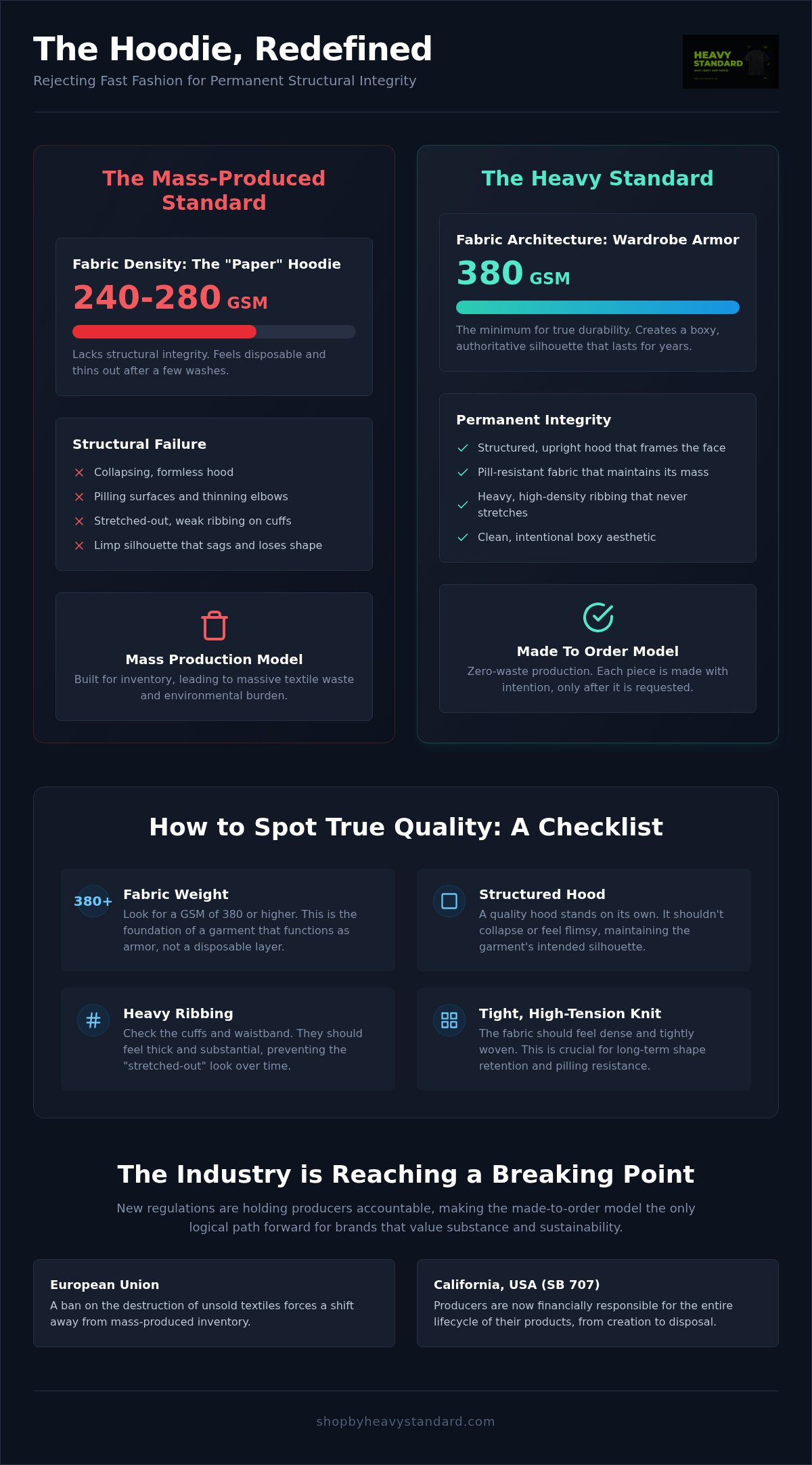
Standard retail hoodies usually fall between 240gsm and 280gsm. At this weight, the garment lacks structural integrity. It cannot hold a boxy silhouette. It feels like a long-sleeved shirt with a hood attached. Many consumers are tricked by a "soft-touch" finish in the store. This is a red flag. Softness often indicates low-density fibers that have been brushed to create a temporary, fuzzy feel. It doesn't last. While Polar fleece is categorized by various weights for performance, generic retail fleece is designed for the rack, not for longevity. Heavyweight cotton offers a tactile density that generic blends cannot mimic. It stays thick. It stays structured. It stays in your rotation.
Intentionality Over Inventory
The industry is reaching a breaking point. Mass-produced inventory leads to massive waste. New regulations in 2026 reflect this reality. The EU has banned the destruction of unsold textiles. In the United States, California's SB 707 now holds producers financially responsible for the entire lifecycle of their products. This makes the made to order hoodie the only logical path forward for a brand that values substance.
Choosing a made to order hoodie means rejecting the "pile it high" retail model. By producing only what is requested, we eliminate the burden of unsold stock. This isn't just about efficiency; it's about a psychological shift. You value what you wait for. A garment produced with intention carries a sense of quiet confidence. You aren't buying a temporary trend. You're supporting a demand-driven model that prioritizes garment architecture over mindless inventory. This is how we move from disposable fashion to permanent staples. Focus on what the hoodie is made of, not just what is printed on it. Quality is a standard, not an option.
The 380GSM Standard: Engineering the Perfect Hoodie
Architecture matters. A hoodie shouldn't just be an extra layer. It should be a foundation. Most brands hide behind vague descriptors like "premium fleece" or "ultra-soft." We rely on technical specifications. The 380GSM standard isn't a suggestion. It's the minimum requirement for a garment that functions as armor. When you choose a made to order hoodie, you're investing in a specific weight that defines the way the garment moves and hangs on the body.
What is 380GSM Fabric?
380GSM refers to 380 grams per square meter of fabric density. This number represents the physical weight and thickness of the material. Compare this to the standard retail average of 250GSM. The difference is tactile. A higher density means more fibers are packed into every square inch. This creates a natural barrier against the cold and extends the garment's lifespan significantly. While a 250GSM hoodie begins to thin at the elbows and neck after a few months, 380GSM maintains its mass. It's built for years, not seasons.
Structural Integrity and Knit Density
Density dictates shape. Cheap hoodies sag. They lose their silhouette because the knit is loose and the fibers are weak. A made to order hoodie uses a tight, high-tension knit to ensure the fabric stands on its own. This is critical for the hood. A flimsy hood collapses and loses its form. A heavyweight hood stays structured and upright, framing the face and maintaining the intended aesthetic even when down.
Heavy ribbing is equally essential. We use high-density ribbing on the cuffs and waistband to prevent the "stretched out" look that ruins a boxy fit. In 2026, durability benchmarks are shifting. Consumers want garments that resist pilling and maintain their architecture through repeated wear. Heavyweight cotton is the only material that meets this standard. It offers superior thermal regulation compared to synthetic blends. Cotton breathes. It manages moisture. It provides a dry, substantial warmth that polyester cannot match. This technical approach defines our aesthetic. It's quiet confidence in physical form. If you're tired of flimsy fashion, explore our heavyweight oversized hoodies to see the 380GSM standard in person.
Made to Order vs. Off-the-Shelf: Is the Wait Worth It?
Speed is a distraction. The retail industry relies on the impulse buy. They promise next-day shipping because they know you won't look closely at the seams if the delivery is fast. But speed has a cost. Off-the-shelf hoodies are built for the shelf, not the wearer. When you choose a made to order hoodie, you trade immediate gratification for permanent quality. It's a calculated decision. You aren't just buying a layer; you're securing a staple.
Mass production is optimized for logistics. Every gram of fabric weight adds to the shipping bill. To keep margins high, big-box retailers trim the density. They settle for 250gsm because it's cheaper to move across the ocean in bulk. We don't. A 380gsm garment is heavier to ship, but it's better to wear. The "cost per wear" of a heavyweight staple is significantly lower than a flimsy alternative. One high-standard hoodie outlasts four generic versions. The math favors substance.
Precision Craftsmanship vs. Mass Assembly
Mass assembly lines prioritize volume. Quality control becomes a statistical average. In a made-to-order model, every piece is a focus. Small-batch runs allow for rigorous inspection of every stitch and hem. This process eliminates "warehouse fatigue." Most retail stock sits in suboptimal conditions for months, absorbing dust and losing its crispness before it even reaches you. Our drop-style model ensures your garment is fresh from production. It hasn't been sitting in a stack of ten thousand. It was made specifically for you.
Sustainability as a Standard
The environmental impact of unsold inventory is no longer just a moral issue. In 2026, it's a legal liability. New EU regulations now ban the destruction of unsold textiles for large enterprises. In California, the SB 707 Responsible Textile Recovery Act requires producers to be financially responsible for their products' entire lifecycle. The made to order hoodie solves this problem at the source. We only produce what is needed. There is no deadstock. No landfill crisis. This is zero-waste manufacturing in its purest form. It aligns with a "buy less, buy better" mentality. You wait a few weeks. You wear it for a decade.
Fit and Silhouette: Mastering the Boxy Aesthetic
Architecture is intent. A hoodie should define your shape, not hide it. The industry has moved past the restrictive, dated slim-fit era. Modern streetwear is built on the boxy frame. This isn't just about size; it's about geometry. The drop shoulder is the pivot point of this look. It lowers the seam to the upper arm, creating a broader, more relaxed profile that transitions smoothly without the bunching found in traditional cuts. It's a deliberate, authoritative line. By shifting the seam, the garment hangs with a sense of purpose.
The Boxy Fit Framework
A true boxy fit follows a specific blueprint. Wide chest. Structured shoulders. Slightly cropped length. This prevents the garment from looking like a shapeless, baggy tent. To achieve this, density is mandatory. A made to order hoodie uses 380GSM cotton to ensure the sleeves "stack" rather than sag. Heavyweight fabric has the physical mass to hold these folds on the forearm. Flimsy fabrics can't do this. They simply drape and wrinkle, losing the architectural "armor" effect. While traditional oversized gear often looks accidental, a boxy fit looks engineered. It provides a frame that stands independent of the wearer's body.
Finding Your Size in Heavyweight Gear
Measuring for an oversized fit requires a focus on substance over labels. Don't just select your usual size. Focus on the chest width and the shoulder drop. The Heavy Standard approach prioritizes how the fabric interacts with your frame. You want enough room for movement without the garment overwhelming your height. This is how to measure for an oversized fit that doesn't overwhelm. This is why the slightly cropped hem is vital; it keeps the proportions balanced and prevents the fabric from pooling at the waist.
Maintaining this silhouette is a matter of discipline. Heat is the enemy of structure. To keep the 380GSM cotton dense and the lines sharp, wash cold and hang dry. Proper care ensures the fibers don't break down or lose their "stack." Investing in a made to order hoodie ensures your silhouette remains a permanent fixture in your wardrobe, not a temporary trend that fades after a few laundry cycles. Styling this piece is a balance of proportions. Pair the boxy top with straight-leg denim or relaxed trousers to complement the larger profile. If you're ready to fix your fit, shop our oversized hoodies to experience the difference in intentional construction.
Securing the Standard: The Heavy Standard Approach
Heavy Standard is a conviction, not a trend. We operate with quiet confidence. We don't participate in the frantic noise of typical retail marketing. There are no countdown timers or hollow "limited time" threats. Our authority comes from the physical integrity of the garment. When you invest in a made to order hoodie, you're aligning with a philosophy that prioritizes substance over hype. We strip away the unnecessary to focus on what remains: the fabric, the fit, and the finish.
The Armor of Everyday Life
A 380GSM hoodie functions as architecture for your body. It provides a tactile sense of security that lightweight alternatives cannot replicate. This is unpretentious quality. You feel the weight on your shoulders. You see the structured lines of the boxy silhouette in the mirror. It's a grounded experience. We reject the loud energy of modern streetwear because high-standard basics don't need to scream.
The 380GSM density creates a dry, substantial warmth. It is reliable. It is consistent. By focusing on material weight rather than seasonal graphics, we create pieces that transcend the fast-fashion cycle. This is the "armor" effect. It protects the wearer from the elements and the volatility of temporary trends. It is a permanent staple for a minimalist wardrobe.
How to Join the Heavy Standard
Securing a made to order hoodie requires intentionality. We don't maintain a warehouse of infinite stock. That model leads to compromise and waste. Instead, we operate on a drop-style system. This ensures every piece meets our durability benchmarks before it reaches your door. The process is straightforward but disciplined. We announce a window for orders. We produce exactly what is requested. We deliver a garment built for longevity.
Joining our community is the only way to track these releases. Because we prioritize precision craftsmanship over mass assembly, our production capacity is focused. We don't use hyperbole to sell; we use technical specs to inform. Our made-to-order model ensures you get exactly what you pay for: a heavyweight staple that holds its shape for years. If you value longevity over the immediate and the flimsy, Join the Heavy Standard email list for the next 380GSM drop. This is where substance becomes the standard.
The Future of Permanent Staples
The era of disposable fashion is ending. We've established that 380GSM heavyweight cotton provides the physical integrity that mass-produced fleece lacks. This density isn't just about warmth; it's about maintaining a boxy fit precision that stays structured after years of wear. Choosing a made to order hoodie is a rejection of the warehouse model. It is a commitment to a zero-waste process that prioritizes the individual garment over mindless inventory. This is the end of flimsy fashion.
Quiet confidence starts with what you wear. You don't need loud logos when the architecture of your clothing speaks for itself. This is unpretentious quality. It's a grounded approach to a modern wardrobe. Stop buying replacements for flimsy basics. Invest in a standard that lasts. Secure your 380GSM architecture; Join the Heavy Standard mailing list. Your rotation deserves substance. We're ready to build it for you. Your staples should be permanent.
Frequently Asked Questions
How long does a made to order hoodie typically take to ship?
Production begins immediately after a drop window closes. Since every made to order hoodie is constructed specifically for the buyer, shipping times reflect the time needed for precision assembly and quality control. This intentional delay ensures your garment hasn't been sitting in a dusty warehouse for months. We prioritize physical integrity over fast-fashion speed. You'll receive a tracking number as soon as your staple is ready for transit.
What is the difference between 380GSM and a standard store-bought hoodie?
Density is the primary differentiator. A standard retail hoodie typically weighs around 250GSM, which feels thin and loses its shape after a few laundry cycles. Our 380GSM fabric is significantly heavier and more resilient. This weight creates a natural "armor" effect, providing superior thermal regulation and a structured silhouette. It feels substantial on the body and resists the thinning common in mass-produced fleece. It's a technical upgrade for any rotation.
Does heavyweight cotton shrink more than regular cotton?
Heavyweight cotton is resilient, but it still requires disciplined care to maintain its size. Because our hoodies use dense 380GSM fibers, they hold their structure better than lightweight alternatives. However, high heat in a dryer will cause any natural cotton fiber to contract. We recommend washing cold and hanging to dry. This preserves the boxy fit and ensures the fabric density remains consistent throughout the life of the garment. Avoid the dryer entirely.
Why do made-to-order brands use a drop-style shop model?
The drop-style model eliminates the waste associated with traditional mass production. By opening limited windows for orders, we ensure that every made to order hoodie has a specific destination. This prevents the "deadstock" crisis where unsold inventory ends up in landfills. It also allows our team to focus entirely on quality control for a single batch. This approach reflects a commitment to intentional manufacturing and quiet confidence rather than mindless retail volume.
Is a boxy fit the same as an oversized fit?
Not exactly. While a boxy fit is oversized, it's defined by specific architectural lines. Traditional oversized hoodies are often just "baggy," which can look accidental or sloppy. A boxy fit features a wide chest and a slightly cropped length to maintain better body proportions. It uses dropped shoulders to create a structured silhouette. This geometry requires 380GSM heavyweight fabric to look sharp rather than sagging like a standard, lightweight oversized sweatshirt.
How should I care for a 380GSM heavyweight hoodie to ensure it lasts?
Longevity depends on your maintenance routine. You should always wash your heavyweight hoodie in cold water with similar colors to prevent fiber breakdown. Avoid using a tumble dryer, as high heat can damage the cotton and lead to unwanted shrinkage. Hanging the garment to dry preserves the density of the 380GSM knit. This simple discipline ensures the hood remains structured and the boxy silhouette stays intact for years of consistent, daily wear.
Can I customize the design of my made to order hoodie?
We focus on the physical architecture of the garment rather than custom graphics. Our made to order hoodie model is designed to ensure the integrity of the 380GSM fabric and the precision of the boxy fit. We don't offer graphic design services or individual printing customizations. Our goal is to provide high-standard, no-frills basics that serve as the foundation of a minimalist wardrobe. The value is in the construction, not the branding.
What makes Heavy Standard hoodies different from workwear brands like Carhartt?
The difference lies in the silhouette and the specific fabric density. Traditional workwear brands often prioritize utility with a "room to move" fit that can look baggy and unstructured. Heavy Standard focuses on a boxy, streetwear-inspired aesthetic engineered for modern proportions. While workwear is durable, our 380GSM hoodies are designed specifically for the "armor" effect and a structured drape. We offer a minimalist, no-frills alternative to traditional, industrial-styled apparel.
