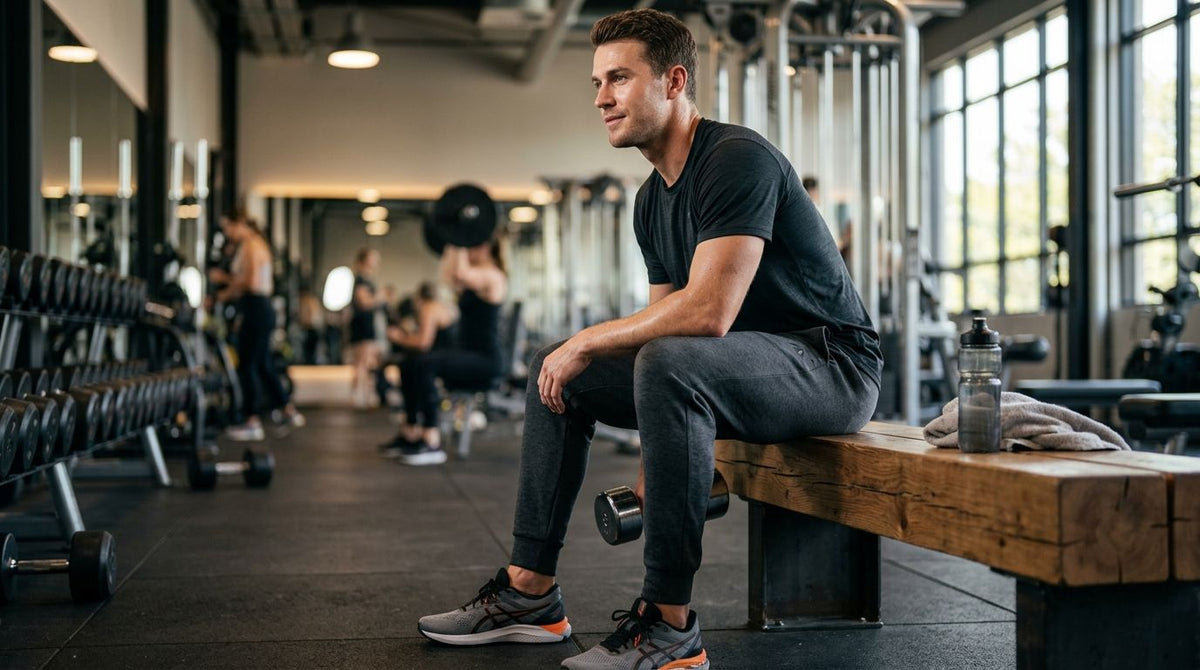
Comfort in gym sweatpants comes down to three things: fabric weight, room through the hip and thigh, and what happens at the ankle when you squat. Best overall for gym comfort: heavyweight barrel-leg fleece sweatpants. Best for lifting and rack work: tapered heavyweight joggers. Best budget option: midweight fleece sweatpants. Best for mobility and recovery days: loose-fit oversized sweatpants. Best for post-workout lounging: relaxed straight-leg fleece.
- Best gym sweatpants comfort in 2026 comes from heavyweight fleece (220gsm+) with a barrel or tapered leg, not thin midweight blends.
- Barrel-leg heavyweight fleece sweatpants win overall for squat depth and knee room without excess fabric bunching at the ankle.
- Tapered joggers are the pick for lifting days where a snug ankle keeps fabric off the bar path.
- Loose-fit oversized sweatpants trade structure for airflow on mobility and recovery days.
- Midweight fleece is the honest budget option, not the comfort winner.
Why this matters
Most gym sweatpants complaints aren't about the workout — they're about the pants riding up mid-squat, bunching at the knee on a leg press, or going see-through after six washes. That's a fabric weight problem, not a willpower problem. Cotton fleece under 150 gsm stretches thin fast; anything at 220 gsm or above holds its shape through a full training block. If you've been cycling through pairs every few months, the fix is usually heavier fleece, not a different brand.
Fit matters just as much as weight. A pair built for lounging on a couch moves differently than a pair built for a barbell squat rack. That's why this list ranks by use case instead of by a single "best" — the pants that win leg day aren't the pants that win recovery day.
What makes the best gym sweatpants for comfort
- Fabric weight — 220 gsm and up holds shape under repeated stretch; anything lighter thins out fast
- Leg opening — tapered for barbell work, straight or barrel for general training and squats
- Waistband construction — a wide elastic band with drawstring beats a thin single-layer band for staying put through sets
- Rise and crotch gusset — deep enough to clear a full squat without pulling at the waist
- Ankle cuff or hem — ribbed cuffs keep fabric off machine pulleys; open hems suit a looser lounge fit
- Breathability of the blend — cotton-heavy fleece for warmth, cotton-poly blends for sessions with more sweat
Heavy Standard builds around the loose fit sweatpants end of this spectrum in heavyweight cotton fleece, which is why the barrel-leg cut shows up first on this list.
At a glance
| Style | Best for | Standout feature | Key limitation |
|---|---|---|---|
| Heavyweight barrel-leg fleece | Overall gym comfort | Room through hip and knee without ankle bulk | Runs bulkier under tight training gear |
| Tapered heavyweight joggers | Lifting and rack work | Ankle stays clear of bar path and pulleys | Less airflow than a looser cut |
| Midweight budget fleece | Budget-conscious buyers | Lower fabric weight keeps cost down | Thins and loses shape faster over time |
| Loose-fit oversized sweatpants | Mobility and recovery days | Maximum airflow and unrestricted movement | Excess fabric can catch on gym equipment |
| Relaxed straight-leg fleece | Post-workout lounging | Even fit with no taper pressure at the ankle | Not built for high-movement training |
1. Heavyweight barrel-leg fleece sweatpants: best gym sweatpants for overall comfort
Barrel-leg fleece sweatpants sit wide through the thigh and knee, then taper slightly at the ankle without the aggressive narrowing of a jogger. That shape clears a deep squat or lunge without the fabric pulling across the knee, which is the most common complaint with skinny-fit training pants.
Barrel-leg fleece pros:
- Full range of motion through squats, lunges and floor work
- Heavyweight cotton fleece (220 gsm+) holds shape wash after wash
- Wide leg opening doesn't restrict blood flow during long sessions
Barrel-leg fleece cons:
- More fabric volume than a tapered jogger, which some lifters find bulky under a rack
- Not the pick for anyone who wants a slim silhouette outside the gym
Best for: lifters and general gym-goers who want one pair that works for squats, machines and warmup sets.
Verdict: Buy. This is the default recommendation for anyone asking what the most comfortable gym sweatpants are in 2026.
2. Tapered heavyweight joggers: best gym sweatpants for lifting and rack work
Tapered joggers narrow from knee to ankle, which keeps fabric off barbells, pulleys and machine weight stacks. That matters more than it sounds — loose fabric near the ankle is a real snag risk on cable machines and leg press sleds.
Tapered jogger pros:
- Ankle stays clear of equipment during compound lifts
- Cleaner silhouette for anyone training in front of a mirror or filming form checks
- Ribbed cuffs keep the taper in place through a full session
Tapered jogger cons:
- Tighter ankle can feel restrictive on hot training days
- Less airflow than a barrel or loose-fit cut
Best for: lifters doing barbell work, cable machines or anything with moving parts near the ankle.
Verdict: Buy if your training is rack-heavy; Hold if you mostly do bodyweight or cardio work.
3. Midweight budget fleece sweatpants: best gym sweatpants for budget buyers
Midweight fleece in the 150-220 gsm range costs less to produce, which usually means a lower price point. The tradeoff is durability — fabric in this range thins faster under repeated stretching and washing than heavyweight cotton fleece.
For a full rundown of what's worth buying at a lower price point, the budget heavyweight streetwear picks guide breaks down where fabric weight and price intersect.
Midweight budget fleece pros:
- Lower cost of entry for anyone building a training wardrobe from scratch
- Lighter weight suits warmer climates or indoor gyms without AC
Midweight budget fleece cons:
- Loses shape and pills faster than heavyweight cotton
- Thinner fabric shows sweat and wear sooner
Best for: buyers who train a few times a week and don't need gym sweatpants to survive daily wear.
Verdict: Hold. Fine as a starter pair, but expect to replace it sooner than a heavyweight option.
4. Loose-fit oversized sweatpants: best gym sweatpants for mobility and recovery days
Oversized cuts drop the taper entirely and add room through the seat and thigh. That extra fabric means better airflow on lighter training days — mobility work, stretching, active recovery — where you're not moving through a barbell rack.
Loose-fit oversized pros:
- Maximum range of motion for stretching and mobility drills
- Comfortable for long recovery-day wear beyond the gym
- Breathable fit reduces overheating on lighter sessions
Loose-fit oversized cons:
- Extra fabric can catch on gym equipment during heavier lifts
- Not the pick for anyone doing barbell work with a loaded bar path
Best for: recovery days, mobility sessions, and anyone who wears gym pants outside the gym too.
Verdict: Buy for recovery-day rotation; Skip as your only pair if you lift heavy most days.
5. Relaxed straight-leg fleece: best gym sweatpants for post-workout lounging
Straight-leg fleece keeps an even width from hip to ankle with no taper and no barrel shape. It's built for comfort after the workout is done — sitting, driving home, or hanging around before a shower — rather than for the training itself.
Relaxed straight-leg pros:
- Even fit with no pressure points at hip, knee or ankle
- Comfortable for extended sitting or low-movement time
- Simple silhouette that layers easily under a hoodie
Relaxed straight-leg cons:
- No tapering means more fabric to catch on gym equipment
- Not ideal for high-movement training like sprints or plyometrics
Best for: the walk from the gym floor to the car, not the workout itself.
Verdict: Hold. Keep a pair for after training, but don't train hard in it.
How we ranked
Each style is scored against the same six criteria: fabric weight, leg opening, waistband construction, rise and gusset depth, ankle cuff design, and blend breathability. No pair wins on all six — the ranking reflects which criteria matter most for a specific use case, which is why barrel-leg fleece tops the list overall but tapered joggers win for rack-heavy training.
Which gym sweatpants should you choose?
If you only buy one pair in 2026, heavyweight barrel-leg fleece sweatpants are the safest default — they clear a squat, hold shape over time, and work for both lifting and general training. Add tapered joggers if barbell and machine work is most of your routine, and keep a loose-fit or straight-leg pair for recovery days and the ride home. Skip midweight budget fleece as your primary pair; it's a fine backup, not a long-term training piece.
FAQ
What's the best gym sweatpants comfort option in 2026?
Heavyweight barrel-leg fleece sweatpants at 220 gsm or above are the most comfortable option for general gym use in 2026. They clear a full squat and hold their shape through repeated washing better than lighter fleece.
Are tapered joggers or barrel-leg sweatpants better for the gym?
Tapered joggers work better for barbell and rack work because the narrow ankle stays clear of equipment. Barrel-leg sweatpants win for general comfort and range of motion across squats and floor work.
How much does a good pair of gym sweatpants cost?
Pricing varies by fabric weight and construction, with heavyweight cotton fleece typically priced above lighter midweight blends. Check current listings for exact pricing since it shifts by style and season.
What gsm is best for gym sweatpants?
220 gsm and above is the heavyweight range that holds shape under repeated stretching and washing. Anything under 150 gsm is considered lightweight and wears thin faster under regular training use.
Are loose-fit sweatpants good for lifting?
Loose-fit sweatpants are better suited to mobility work and recovery days than heavy barbell lifting. The extra fabric volume can catch on racks and machines during loaded lifts.
Do heavier sweatpants run hotter than midweight ones?
Yes, heavyweight cotton fleece traps more heat than midweight fabric, which matters in warm gyms without air conditioning. Choose a lighter cotton-poly blend if overheating is a regular issue.
Should gym sweatpants have a tapered or straight ankle?
Tapered ankles are better for lifting since they stay clear of bars and cable pulleys. Straight or barrel ankles suit general training and squats where equipment contact is less of a concern.
One last thing
The detail most buyers skip is the gusset — a deep crotch gusset is what actually lets heavyweight fleece clear a full squat without pulling at the waistband. Fabric weight gets all the attention, but a thin gusset in a heavy pair will still restrict you at the bottom of a lift.