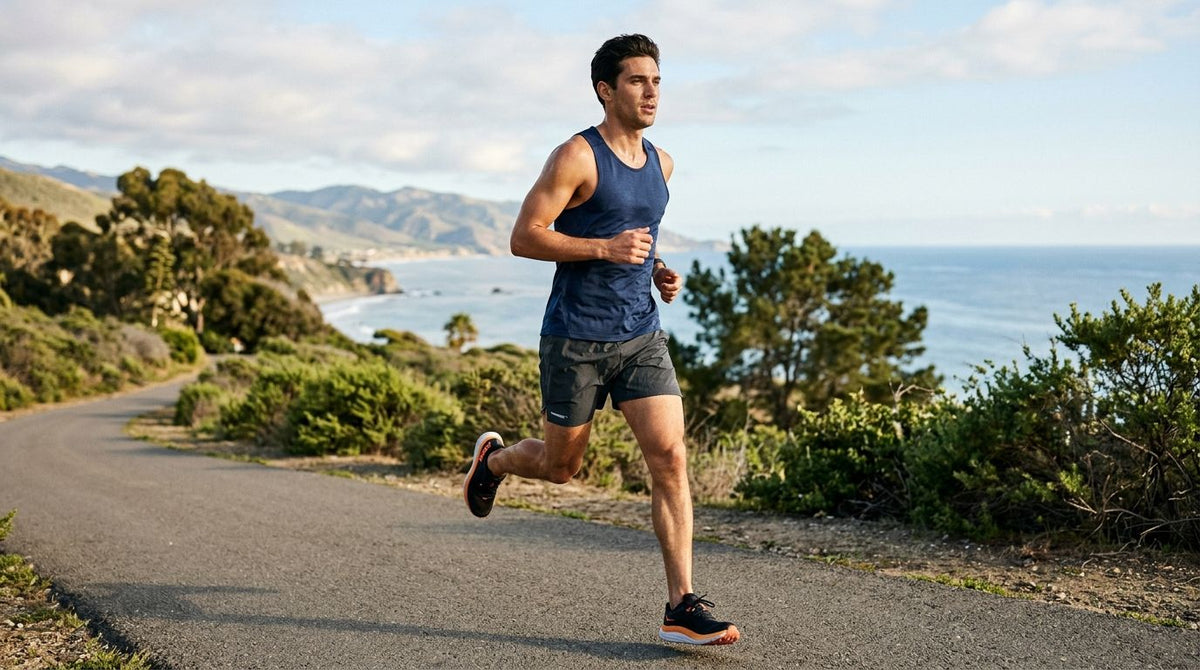
No liner shorts strip out the built-in mesh brief and leave the fabric to do the work — the right pick depends on what you're actually doing in them, not just what's on the label. This guide ranks the options by use case so you land on a short that fits your workout, your errands, or your everyday rotation without extra padding you don't need.
- Heavy Standard's Lightweight Drawstring Training Shorts is the best no liner shorts pick for 2026 at 230gsm.
- Mesh basketball-style shorts win for high-heat cardio; cotton twill wins for everyday wear.
- Lifters get more support pairing a compression base layer under any liner-free short.
- A built-in liner adds compression, not comfort — skip it if you already wear separate underwear or compression shorts.
Best overall: Heavy Standard's Lightweight Drawstring Training Shorts. Best for high-heat cardio: mesh basketball-style shorts. Best for everyday wear: cotton twill shorts. Best for lifting: a compression base layer worn under any liner-free short.
Why this matters
A liner is just a built-in mesh brief sewn into the waistband — it's not required for a short to function, and for a lot of guys it's the reason the short bunches, rides up, or feels damp by the second mile. Heavy Standard builds most of its lineup heavy — 260gsm cotton tees, boxy jerseys — but performance shorts are the one category where lighter is the better call, and liner-free is the default a lot of experienced lifters and runners land on once they've tried it.
The real question isn't "lined or unlined" in the abstract. It's which liner-free short matches what you're doing in it in 2026, because a mesh basketball short and a cotton twill short solve completely different problems.
What makes the best no-liner shorts
- Fabric weight — lighter weaves (around 230gsm) breathe better for cardio; heavier weaves hold shape longer for daily wear.
- Waist construction — a drawstring waistband holds fit without a liner doing the securing work.
- Inseam length — shorter inseams (5 to 7 inches) suit training; longer inseams suit everyday wear.
- Weave type — mesh moves air, woven polyester resists snagging, cotton twill holds a crease.
- Pocket build — zip or snap pockets matter more once there's no liner to catch loose items.
- What you're wearing underneath — no liner only works if you've already got compression shorts or underwear sorted.
No-liner shorts at a glance
| Pick | Best for | Standout feature | Key limitation |
|---|---|---|---|
| Heavy Standard Lightweight Drawstring Training Shorts | Overall / training days | 230gsm polyester, loose cut through the thigh | No built-in support — bring your own underlayer |
| Mesh basketball-style shorts | High-heat cardio | Maximum airflow | Less structure, can feel baggy off the court |
| Cotton twill shorts | Everyday wear | Holds shape, looks intentional outside the gym | Less breathable under real exertion |
| Compression base layer + outer short | Lifting | Full support without a fused liner | Two garments instead of one |
1. Heavy Standard Lightweight Drawstring Training Shorts: best no liner shorts overall
This is the one liner-free short in the Heavy Standard lineup, and it's built deliberately lighter than the rest of the brand's catalog. At 230gsm polyester — noticeably lighter than the 260gsm cotton used in Heavy Standard's heavyweight tee — it's cut loose through the thigh with a drawstring waist that does the holding job a liner would otherwise handle.
Heavy Standard Lightweight Drawstring Training Shorts pros:
- Loose thigh cut moves without a liner fighting your stride
- 230gsm polyester dries faster than cotton twill
- Drawstring waist keeps fit secure without built-in compression
- Sits in the same catalog as Heavy Standard's heavier pieces, so it pairs easily for styling
Heavy Standard Lightweight Drawstring Training Shorts cons:
- No built-in support — you'll want your own underwear or compression short underneath
- Lighter build means it won't match the boxy, heavyweight look of the rest of the line
- Polyester doesn't hold a crease the way cotton twill does for non-gym wear
Best for: guys who want one liner-free short that covers training days without extra weight.
Verdict: Buy.
2. Mesh basketball-style shorts: best for high-heat cardio
Mesh shorts are the original liner-free category — open-weave polyester that moves air across the whole leg. They're the standard pick for basketball, outdoor running in heat, and anything where sweat volume is the main problem you're solving for.
Mesh basketball-style shorts pros:
- Highest airflow of any woven short
- Dry fast between sets or sprints
- Wide, unrestricted cut for lateral movement
Mesh basketball-style shorts cons:
- Baggier fit looks purely athletic, not everyday-ready
- Thin mesh shows more wear over time than a tighter weave
Best for: cardio sessions where heat and sweat, not structure, are the problem.
Verdict: Buy — for training, not for daily rotation.
3. Cotton twill shorts: best for everyday wear
Cotton twill is the liner-free option that reads as clothing, not gym gear. Tighter weave than mesh, more structure than a jersey short, and it holds a crease well enough to wear outside the gym without looking like you just left one.
Cotton twill shorts pros:
- Holds shape through the day better than mesh or lightweight poly
- Looks intentional for errands, travel, or casual outings
- Pairs cleanly with a plain tee or a boxy crew
Cotton twill shorts cons:
- Traps more heat than mesh or 230gsm poly under real exertion
- Takes longer to dry if it gets wet
Best for: everyday wear where you want a liner-free short that doesn't read as workout gear.
Verdict: Buy — for casual days, skip for hard training.
4. Compression base layer plus liner-free outer short: best for lifting
This isn't one garment — it's a system. Lifters who want the support a liner provides, without the liner itself running warm or bunching under load, wear a separate compression short underneath any liner-free outer short.
Compression + outer short combo pros:
- Full support without a fused liner limiting movement
- Swap the outer short by season or activity without changing your base layer
- Compression layer can be replaced independently when it wears out
Compression + outer short combo cons:
- Two garments to buy and launder instead of one
- Adds a layer in hot weather, which offsets some of the breathability gain
Best for: lifters who want liner-level support without a liner fused into the short.
Verdict: Hold — worth it only if you already own a compression base layer.
How we ranked
Each pick above was scored against the same six criteria: fabric weight, waist construction, inseam length, weave type, pocket build, and what you're expected to wear underneath. The Heavy Standard training short leads because it's the only entry that combines a liner-free build with a fit meant to work standalone — everything else on the list solves for one use case at the cost of another, which is exactly why they're ranked by scenario instead of stacked against each other.
Which no-liner shorts should you choose?
If you only want one short in the rotation, Heavy Standard's Lightweight Drawstring Training Shorts is the pick for 2026 — it's liner-free, light at 230gsm, and versatile enough to cover most training days. Go mesh if heat and sweat volume are your main concern, twill if you want a liner-free short that looks like clothing, and the compression combo only if you already own the base layer and just want more support under load.
FAQ
What are no liner shorts?
No liner shorts skip the built-in mesh brief sewn into most gym shorts, leaving just the outer fabric. You wear your own underwear or a separate compression short underneath instead.
Is it better to buy shorts without a liner?
For most guys, yes — liners trap heat, bunch during movement, and wear out faster than the outer fabric. A liner-free short paired with your own underlayer gives you more control over fit and support.
What's the best no liner shorts pick for gym training in 2026?
Heavy Standard's Lightweight Drawstring Training Shorts is the strongest overall pick for 2026 at 230gsm polyester, cut loose through the thigh with a drawstring waist that holds fit without a liner.
Are mesh shorts better than cotton twill for no liner wear?
Mesh shorts breathe better for high-heat cardio; cotton twill holds shape better for everyday wear outside the gym. Pick based on the activity, not a general preference.
Can you wear compression shorts under liner-free shorts?
Yes, and it's the standard workaround for lifters who want liner-level support. Wear a separate compression short underneath any liner-free outer short instead of relying on a fused liner.
What's the difference between lined and unlined shorts?
Lined shorts have a mesh brief sewn into the waistband for built-in support. Unlined shorts skip that layer entirely, so support and moisture control come from whatever you wear underneath.
Do no liner shorts run smaller than lined shorts?
Not inherently — fit depends on the cut and fabric weight, not the presence of a liner. A loose-cut liner-free short like a 230gsm training short can run roomier through the thigh than a fitted lined short.
One last thing
Heavy Standard builds most of its catalog heavy on purpose — 260gsm cotton tees, boxy jerseys — but the Lightweight Drawstring Training Shorts sit at 230gsm for a reason: a liner-free short needs airflow the heavier pieces in the lineup aren't built for. That's the tell for judging any no-liner short in 2026 — if the fabric weight matches a tee instead of a technical short, the liner was probably doing more work than you thought.